-
Broz, P., Pelegrin, P., Shao, F., 2020. The gasdermins, a protein family executing cell death and inflammation. Nat. Rev. Immunol. 20, 143-157.
-
Carsetti, R., Quintarelli, C., Quinti, I., Mortari, E.P., Zumla, A., Ippolito, G., Locatelli, F., 2020. The immune system of children: the key to understanding SARS-CoV-2 susceptibility? Lancet. Child. Adolesc. 4, 414-416.
-
Chan, L.G., Parashar, U.D., Lye, M.S., Ong, F.G., Zaki, S.R., Alexander, J.P., Ho, K.K., Han, L.L., Pallansch, M.A., Suleiman, A.B., Jegathesan, M., Anderson, L. J., 2000. Deaths of children during an outbreak of hand, foot, and mouth disease in sarawak, malaysia: clinical and pathological characteristics of the disease. For the Outbreak Study Group. Clin. Infect. Dis. 31, 678-683.
-
Chang, L.Y., Chang, I.S., Chen, W.J., Huang, Y.C., Chen, G.W., Shih, S.R., Juang, J.L., Shih, H.M., Hsiung, C.A., Lin, T.Y., Huang, L. M., 2008. HLA-A33 Is Associated With Susceptibility to Enterovirus 71 Infection. Pediatrics. 122, 1271-1276.
-
Chang, L.Y., Hsiung, C.A., Lu, C.Y., Lin, T.Y., Huang, F.Y., Lai, Y.H., Chiang, Y.P., Chiang, B.L., Lee, C.Y., Huang, L.M., 2006. Status of cellular rather than humoral immunity is correlated with clinical outcome of enterovirus 71. Pediatr. Res. 60, 466-471.
-
De Schutter, E., Roelandt, R., Riquet, F.B., Van Camp, G., Wullaert, A., Vandenabeele, P., 2021. Punching Holes in Cellular Membranes: Biology and Evolution of Gasdermins. Trends. Cell. Biol. 31, 500-513.
-
Fioravanti, C.H., 2012. Brazilian fitness programme registers health benefits. Lancet. 380, 206.
-
He, W.T., Wan, H.Q., Hu, L.C., Chen, P.D., Wang, X., Huang, Z., Yang, Z.H., Zhong, C.Q., Han, J.H., 2015. Gasdermin D is an executor of pyroptosis and required for interleukin-1β secretion. Cell. Res. 25, 1285-1298.
-
Ho, M., Chen, E.R., Hsu, K.H., Twu, S.J., Chen, K.T., Tsai, S.F., Wang, J.R., Shih, S.R., 1999. An epidemic of enterovirus 71 infection in Taiwan. Taiwan Enterovirus Epidemic Working Group. N. Engl. J. Med. 341, 929-935.
-
Huang, C.C., Liu, C.C., Chang, Y.C., Chen, C.Y., Wang, S.T., Yeh, T.F., 1999. Neurologic complications in children with enterovirus 71 infection. N. Engl. J. Med. 341, 936-942.
-
Lee, K.Y., 2016. Enterovirus 71 infection and neurological complications. Korean. J. Pediatr. 59, 395-401.
-
Liu, X., Zhang, Z., Ruan, J., Pan, Y., Magupalli, V.G., Wu, H., Lieberman, J., 2016. Inflammasome-activated gasdermin D causes pyroptosis by forming membrane pores. Nature. 535, 153-158.
-
Lu, L., Su, S., Yang, H., Jiang, S., 2021. Antivirals with common targets against highly pathogenic viruses. Cell. 184, 1604-1620.
-
Olin, A., Henckel, E., Chen, Y., Lakshmikanth, T., Pou, C., Mikes, J., Gustafsson, A., Bernhardsson, A.K., Zhang, C., Bohlin, K., 2018. Stereotypic Immune System Development in Newborn Children. Cell. 174, 1277-1292.e14.
-
Rogers, C., Erkes, D.A., Nardone, A., Aplin, A.E., Fernandes-Alnemri, T., Alnemri, E.S., 2019. Gasdermin pores permeabilize mitochondria to augment caspase-3 activation during apoptosis and inflammasome activation. Nat. Commun. 10, 1689.
-
Shen, Y.X., Pan, Z.J., Zhang, L., Xue, W., Peng, M.L., Hu, P., Xu, H.M., Chen, M., 2019. Increased effector γδ T cells with enhanced cytokine production are associated with inflammatory abnormalities in severe hand, foot, and mouth disease. Int. Immunopharmacol. 73, 172-180.
-
Shi, J.J., Zhao, Y., Wang, K., Shi, X.Y., Wang, Y., Huang, H.W., Zhuang, Y.H., Cai, T., Wang, F.C., Shao, F., 2015. Cleavage of GSDMD by inflammatory caspases determines pyroptotic cell death. Nature. 526, 660-665.
-
Simon, A.K., Hollander, G.A., McMichael, A., 2015. Evolution of the immune system in humans from infancy to old age. P. Roy. Soc. B-Biol. Sci. 282, 20143085.
-
Solomon, T., Lewthwaite, P., Perera, D., Cardoso, M.J., McMinn, P., Ooi, M.H., 2010. Virology, epidemiology, pathogenesis, and control of enterovirus 71. Lancet. Infect. Dis. 10, 778-790.
-
Tan, X.J., Huang, X.Y., Zhu, S.L., Chen, H., Yu, Q.L., Wang, H.Y., Huo, X.X., Zhou, J.H., Wu, Y., Yan, D.M., Zhang, Y., Wang, D., Cui, A., An, H., Xu, W., 2011. The Persistent Circulation of Enterovirus 71 in People's Republic of China: Causing Emerging Nationwide Epidemics Since 2008. PloS One. 6, e25662.
-
Wang, C., Huang, M.H., Guo, B.Y., Zhou, X., Cui, Z.Q., Xu, Y., Ren, Y.J., 2025. Severe enterovirus A71 infection is associated with dysfunction of T cell immune response and alleviated by Astragaloside A. Virol. Sin. 40, 451-461.
-
Wang, C., Yang, R.Y., Yang, F.X., Han, Y., Ren, Y.J., Xiong, X.B., Wang, X.Y., Bi, Y.D., Li, L.J., Qiu, Y., Xu, Y., Zhou, X., 2022. Echovirus 11 infection induces pyroptotic cell death by facilitating NLRP3 inflammasome activation. PloS. Pathog. 18, e1010787.
-
Wang, C., Zhang, N., Qi, L.T., Yuan, J.L., Wang, K., Wang, K.L., Ma, S.C., Wang, H.L., Lou, W.J., Hu, P.D., Awais, M., Cao, S., Fu, Z. F., Cui, M., 2017. Myeloid-Derived Suppressor Cells Inhibit T Follicular Helper Cell Immune Response in Japanese Encephalitis Virus Infection. J. Immunol. 199, 3094-3105.
-
Wang, Y.P., Gao, W.Q., Shi, X.Y., Ding, J.J., Liu, W., He, H.B., Wang, K., Shao, F., 2017. Chemotherapy drugs induce pyroptosis through caspase-3 cleavage of a gasdermin. Nature 547, 99-103.
-
Wei, R.C., Yang, C.F., Zeng, M., Terry, F., Zhu, K., Yang, C.H., Altmeyer, R., Martin, W., De Groot, A.S., Leng, Q.B., 2012. A Dominant EV71-Specific CD4+T Cell Epitope Is Highly Conserved among Human Enteroviruses. PloS One. 7, e51957.
-
Wu, X., Zhang, H., Qi, W., Zhang, Y., Li, J., Li, Z., Lin, Y., Bai, X., Liu, X., Chen, X., 2018. Nicotine promotes atherosclerosis via ROS-NLRP3-mediated endothelial cell pyroptosis. Cell. Death. Dis. 9, 171.
-
Xi, J.M., Ye, F., Wang, G.Z., Han, W., Wei, Z.Z., Yin, B., Yuan, J.G., Qiang, B.Q., and Peng, X.Z., 2019. Polypyrimidine Tract-Binding Protein Regulates Enterovirus 71 Translation Through Interaction with the Internal Ribosomal Entry Site. Virol. Sin. 34, 66-77.
-
Xu, W.F., Wang, Y., Cui, S., Zheng, Q.L., Lin, Y.H., Cui, Q.Q., Xie, Y.X., Zeng, Y.M., Zhang, C., Li, Y.J., 2025. Methylcobalamin protects against liver failure via engaging gasdermin E. Nat. Commun. 16, 1233.
-
Xu, Y.J., Zheng, L., Hu, Y.W., and Wang, Q., 2018. Pyroptosis and its relationship to atherosclerosis. Clin. Chim. Acta. 476, 28-37.
-
Yang, K.D., Yang, M.Y., Li, C.C., Lin, S.F., Chong, M.C., Wang, C.L., Chen, R.F., Lin, T.Y., 2001. Altered cellular but not humoral reactions in children with complicated enterovirus 71 infections in Taiwan. J. Infect. Dis. 183, 850-856.
-
Zhang, Z.W., Zhang, H., Li, D.B., Zhou, X.P., Qin, Q., Zhang, Q.Y., 2021. Caspase-3-mediated GSDME induced Pyroptosis in breast cancer cells through the ROS/JNK signalling pathway. J. Cell. Mol. Med. 25, 8159-8168.
-
Zhao, M.Q., Wang, L.H., Lian, G.W., Lin, Z.F., Li, Y.H., Guo, M., Chen, Y., Liu, X.M., Zhu, B., 2020. Characterization of lymphocyte subsets in peripheral blood cells of children with EV71 infection. J. Microbiol. Immunol 53, 705-714.






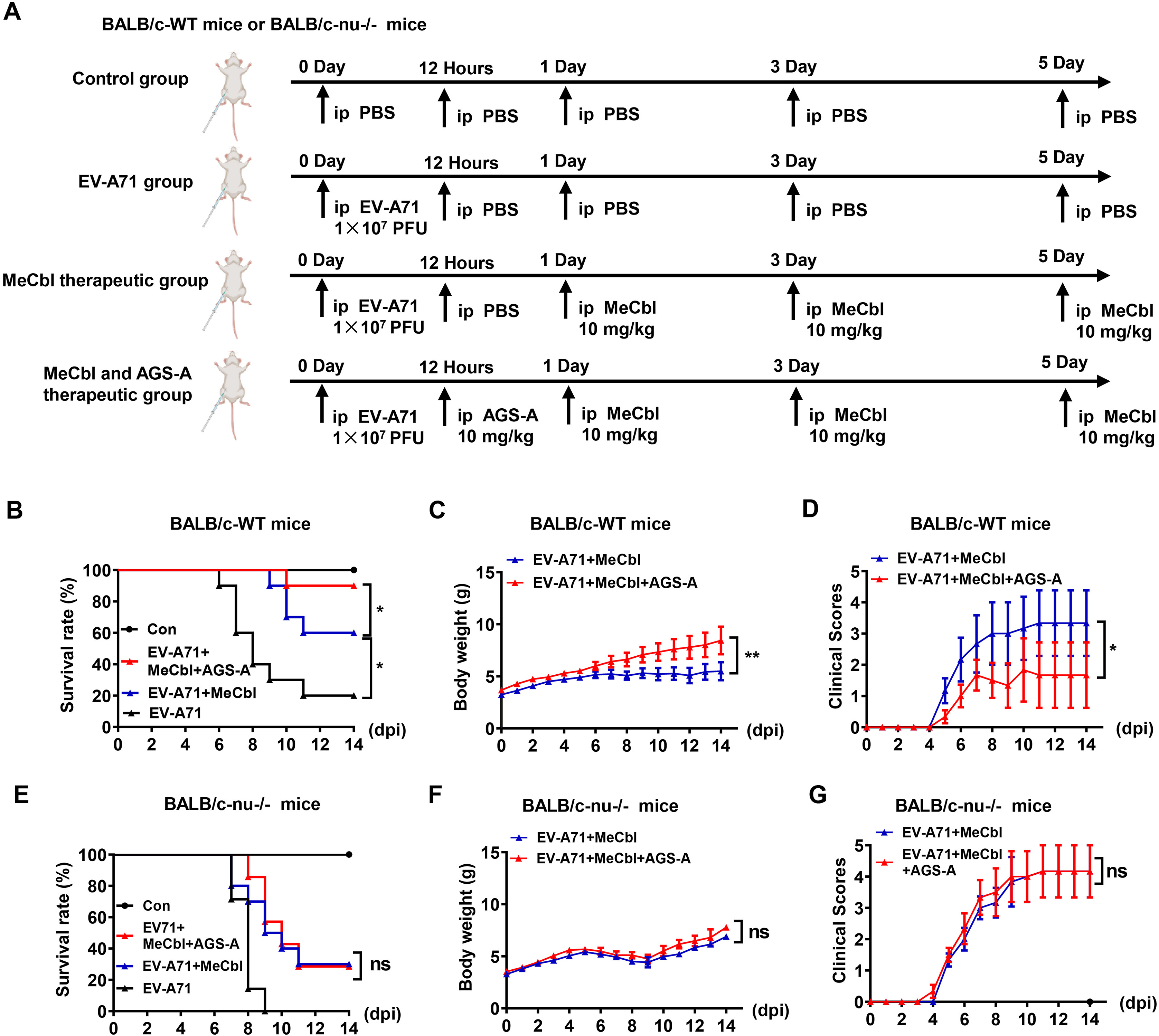



 DownLoad: