-
Ahmad, I., Ullah, S., Alouffi, A., Almutairi, M.M., Numan, M., Tanaka, T., Chang, S.-C., Chen, C.-C., Ali, A., 2023. First Molecular-Based Confirmation of Dermacentor marginatus and Associated Rickettsia raoultii and Anaplasma marginale in the Hindu Kush Mountain Range. Animals 13, 3686. https://doi.org/10.3390/ani13233686.
-
ALI, A., ALMUTAIRI, M.M., ROBBINS, R.G., DOBLER, L.C., ULLAH, S., 2025. Updated checklist, morphological descriptions, hosts and vector potential of ticks (Acari: Argasidae, Ixodidae) in Pakistan. Zootaxa 5725, 151-202. https://doi.org/10.11646/zootaxa.5725.2.1.
-
Ali, A., Ullah, S., Numan, M., Almutairi, M.M., Alouffi, A., Tanaka, T., 2023. First report on tick-borne pathogens detected in ticks infesting stray dogs near butcher shops. Front. Vet. Sci. 10. https://doi.org/10.3389/fvets.2023.1246871.
-
Bai, Y., Zhang, Yanfang, Su, Z., Tang, S., Wang, J., Wu, Q., Yang, J., Moming, A., Zhang, Yujiang, Bell-Sakyi, L., Sun, S., Shen, S., Deng, F., 2022. Discovery of Tick-Borne Karshi Virus Implies Misinterpretation of the Tick-Borne Encephalitis Virus Seroprevalence in Northwest China. Front. Microbiol. 13. https://doi.org/10.3389/fmicb.2022.872067.
-
Bouquet, J., Melgar, M., Swei, A., Delwart, E., Lane, R.S., Chiu, C.Y., 2017. Metagenomic-based Surveillance of Pacific Coast tick Dermacentor occidentalis Identifies Two Novel Bunyaviruses and an Emerging Human Ricksettsial Pathogen. Sci. Rep. 7, 12234. https://doi.org/10.1038/s41598-017-12047-6.
-
Brinkmann, A., Dincer, E., Polat, C., Hekimoglu, O., Hacioglu, S., Foldes, K., Ozkul, A., Oktem, I.M.A., Nitsche, A., Ergunay, K., 2018. A metagenomic survey identifies Tamdy orthonairovirus as well as divergent phlebo-, rhabdo-, chu- and flavi-like viruses in Anatolia, Turkey. Ticks Tick. Borne. Dis. 9, 1173-1183. https://doi.org/10.1016/j.ttbdis.2018.04.017.
-
Capella-Gutierrez, S., Silla-Martinez, J.M., Gabaldon, T., 2009. trimAl: a tool for automated alignment trimming in large-scale phylogenetic analyses. Bioinformatics 25, 1972-1973. https://doi.org/10.1093/bioinformatics/btp348.
-
Chen, C., Chen, H., Zhang, Y., Thomas, H.R., Frank, M.H., He, Y., Xia, R., 2020. TBtools: An Integrative Toolkit Developed for Interactive Analyses of Big Biological Data. Mol. Plant 13, 1194-1202. https://doi.org/10.1016/j.molp.2020.06.009.
-
Chen, S., Saqib, M., Khan, H.S., Bai, Y., Ashfaq, U.A., Mansoor, M.K., Moming, A., Liu, J., Zhou, M., Niazi, S.K., Wu, Q., Sial, A.-U.-R., Tang, S., Sarfraz, M.H., Javed, A., Hayat, S., Khurshid, M., Khan, I., Athar, M.A., Taj, Z., Zhang, B., Deng, F., Zohaib, A., Shen, S., 2024. Risk of infection with arboviruses in a healthy population in Pakistan based on seroprevalence. Virol. Sin. 39, 369-377. https://doi.org/10.1016/j.virs.2024.04.001.
-
Chen, S., Xu, M., Wu, X., Bai, Y., Shi, J., Zhou, M., Wu, Q., Tang, S., Deng, F., Qin, B., Shen, S., 2022. A new luciferase immunoprecipitation system assay provided serological evidence for missed diagnosis of severe fever with thrombocytopenia syndrome. Virol. Sin. 37, 107-114. https://doi.org/10.1016/j.virs.2022.01.018.
-
Dantas-Torres, F., Chomel, B.B., Otranto, D., 2012. Ticks and tick-borne diseases: a One Health perspective. Trends Parasitol. 28, 437-446. https://doi.org/10.1016/j.pt.2012.07.003.
-
Ergunay, K., Bourke, B.P., Reinbold-Wasson, D.D., Nikolich, M.P., Nelson, S.P., Caicedo-Quiroga, L., Vaydayko, N., Kirkitadze, G., Chunashvili, T., Long, L.S., Blackburn, J.K., Cleary, N.G., Tucker, C.L., Linton, Y.-M., 2023. The expanding range of emerging tick-borne viruses in Eastern Europe and the Black Sea Region. Sci. Rep. 13, 19824. https://doi.org/10.1038/s41598-023-46879-2.
-
Fang, L.-Q., Liu, K., Li, X.-L., Liang, S., Yang, Y., Yao, H.-W., Sun, R.-X., Sun, Y., Chen, W.-J., Zuo, S.-Q., Ma, M.-J., Li, H., Jiang, J.-F., Liu, W., Yang, X.F., Gray, G.C., Krause, P.J., Cao, W.-C., 2015. Emerging tick-borne infections in mainland China: an increasing public health threat. Lancet Infect. Dis. 15, 1467-1479. https://doi.org/10.1016/s1473-3099(15)00177-2.
-
Fang, Y., Wang, J., Sun, J., Su, Z., Chen, S., Xiao, J., Ni, J., Hu, Z., He, Y., Shen, S., Deng, F., 2024. RNA viromes of Dermacentor nuttalli ticks reveal a novel uukuvirus in Qinghai Province, China. Virol. Sin. 39, 537-545. https://doi.org/10.1016/j.virs.2024.04.006.
-
Guindon, S., Dufayard, J.-F., Lefort, V., Anisimova, M., Hordijk, W., Gascuel, O., 2010. New Algorithms and Methods to Estimate Maximum-Likelihood Phylogenies: Assessing the Performance of PhyML 3.0. Syst. Biol. 59, 307-321. https://doi.org/10.1093/sysbio/syq010.
-
Habib, I., Hernandez-Valencia, J.C., Martinu, J., Novakova, E., 2025. Viral metagenome characterization reveals species-specific virome profiles in Triatominae populations from the southern United States. https://doi.org/10.1101/2025.09.17.676754.
-
Jamil, L., Li, C., Wang, Y., Jamil, J., Tian, W., Zhao, D., Shen, S., Sun, Y., Zhao, L., Cao, W., 2025. High Diversity and Low Coinfections of Pathogens in Ticks from Ruminants in Pakistan. Microorganisms 13, 1276. https://doi.org/10.3390/microorganisms13061276.
-
Ji, N., Wang, N., Liu, G., Zhao, S., Liu, Z., Tan, W., Wang, S., Sheng, J., Li, F., Wang, Y., 2023. Tacheng Tick Virus 1 and Songling Virus Infection in Great Gerbils (Rhombomys opimus) in Northwestern China. J. Wildl. Dis. 59. https://doi.org/10.7589/JWD-D-21-00137.
-
Jia, N., Wang, J., Shi, W., Du, L., Sun, Y., Zhan, W., Jiang, J.-F., Wang, Q., Zhang, B., Ji, P., Bell-Sakyi, L., Cui, X.-M., Yuan, T.-T., Jiang, B.-G., Yang, W.-F., Lam, T.T.-Y., Chang, Q.-C., Ding, S.-J., Wang, X.-J., Zhu, J.-G., Ruan, X.-D., Zhao, L., Wei, J.-T., Ye, R.-Z., Que, T.C., Du, C.-H., Zhou, Y.-H., Cheng, J.X., Dai, P.-F., Guo, W.-B., Han, X.-H., Huang, E.-J., Li, L.-F., Wei, W., Gao, Y.-C., Liu, J.-Z., Shao, H.-Z., Wang, X., Wang, C.-C., Yang, T.-C., Huo, Q.-B., Li, W., Chen, H.-Y., Chen, S.-E., Zhou, L.-G., Ni, X.-B., Tian, J.-H., Sheng, Y., Liu, T., Pan, Y.-S., Xia, L.-Y., Li, J., Zhao, F., Cao, W.-C., 2020. Large-Scale Comparative Analyses of Tick Genomes Elucidate Their Genetic Diversity and Vector Capacities. Cell 182, 1328–1340.e13. doi:10.1016/j.cell.2020.07.023.
-
Kalyaanamoorthy, S., Minh, B.Q., Wong, T.K.F., von Haeseler, A., Jermiin, L.S., 2017. ModelFinder: fast model selection for accurate phylogenetic estimates. Nat. Methods 14, 587-589. https://doi.org/10.1038/nmeth.4285.
-
Karim, S., Budachetri, K., Mukherjee, N., Williams, J., Kausar, A., Hassan, M.J., Adamson, S., Dowd, S.E., Apanskevich, D., Arijo, A., Sindhu, Z.U., Kakar, M.A., Khan, R.M.D., Ullah, S., Sajid, M.S., Ali, A., Iqbal, Z., 2017. A study of ticks and tick-borne livestock pathogens in Pakistan. PLoS Negl. Trop. Dis. 11, e0005681. https://doi.org/10.1371/journal.pntd.0005681.
-
Katoh, K., Standley, D.M., 2013. MAFFT Multiple Sequence Alignment Software Version 7: Improvements in Performance and Usability. Mol. Biol. Evol. 30, 772-780. https://doi.org/10.1093/molbev/mst010.
-
Kilpatrick, A.M., Randolph, S.E., 2012. Drivers, dynamics, and control of emerging vector-borne zoonotic diseases. The Lancet 380, 1946-1955. https://doi.org/10.1016/s0140-6736(12)61151-9.
-
Kodama, F., Yamaguchi, H., Park, E., Tatemoto, K., Sashika, M., Nakao, R., Terauchi, Y., Mizuma, K., Orba, Y., Kariwa, H., Hagiwara, K., Okazaki, K., Goto, A., Komagome, R., Miyoshi, M., Ito, T., Yamano, K., Yoshii, K., Funaki, C., Ishizuka, M., Shigeno, A., Itakura, Y., Bell-Sakyi, L., Edagawa, S., Nagasaka, A., Sakoda, Y., Sawa, H., Maeda, K., Saijo, M., Matsuno, K., 2021. A novel nairovirus associated with acute febrile illness in Hokkaido, Japan. Nat. Commun. 12. doi:10.1038/s41467-021-25857-0.
-
Li, C.-X., Shi, M., Tian, J.-H., Lin, X.-D., Kang, Y.-J., Chen, L.-J., Qin, X.-C., Xu, J., Holmes, E.C., Zhang, Y.-Z., 2015. Unprecedented genomic diversity of RNA viruses in arthropods reveals the ancestry of negative-sense RNA viruses. Elife 4. doi:10.7554/elife.05378.
-
Liu, X., Kong, J., Shan, Y., Yang, Z., Miao, J., Pan, Y., Luo, T., Shi, Z., Wang, Y., Gou, Q., Yang, C., Li, H., Li, C., Li, S., Zhang, X., Sun, Y., Holmes, E.C., Guo, D., Shi, M., 2025. SegFinder: an automated tool for identifying complete RNA virus genome segments through co-occurrence in multiple sequenced samples. Brief. Bioinform. 26. https://doi.org/10.1093/bib/bbaf358.
-
Ma, J., Lv, X.-L., Zhang, X., Han, S.-Z., Wang, Z.-D., Li, L., Sun, H.-T., Ma, L.-X., Cheng, Z.-L., Shao, J.-W., Chen, C., Zhao, Y.-H., Sui, L., Liu, L.-N., Qian, J., Wang, W., Liu, Q., 2021. Identification of a new orthonairovirus associated with human febrile illness in China. Nat. Med. 27, 434–439. doi:10.1038/s41591-020-01228-y.
-
Madison-Antenucci, S., Kramer, L.D., Gebhardt, L.L., Kauffman, E., 2020. Emerging Tick-Borne Diseases. Clin. Microbiol. Rev. 33. https://doi.org/10.1128/CMR.00083-18.
-
Mantlo, E.K., Haley, N.J., 2023. Heartland Virus: An Evolving Story of an Emerging Zoonotic and Vector-Borne Disease. Zoonotic Diseases 3, 188-202. https://doi.org/10.3390/zoonoticdis3030016.
-
Minh, B.Q., Nguyen, M.A.T., von Haeseler, A., 2013. Ultrafast Approximation for Phylogenetic Bootstrap. Mol. Biol. Evol. 30, 1188-1195. https://doi.org/10.1093/molbev/mst024.
-
Moming, A., Bai, Y., Chen, S., Wu, Q., Wang, J., Jin, J., Tang, S., Sun, S., Zhang, Y., Shen, S., Deng, F., 2023. Epidemiological surveys revealed the risk of TAMV spill-over from ticks to hosts. Infect. Dis. 56, 59–65. doi:10.1080/23744235.2023.2270677.
-
Moming, A., Bai, Y., Wang, J., Zhang, Y., Tang, S., Fan, Z., Deng, F., Shen, S., 2024. The Known and Unknown of Global Tick-Borne Viruses. Viruses 16, 1807. https://doi.org/10.3390/v16121807.
-
Montgomery, E., 1917. On a Tick-Borne Gastro-Enteritis of Sheep and Goats Occurring in British East Africa. Journal of Comparative Pathology and Therapeutics 30, 28-57. https://doi.org/10.1016/S0368-1742(17)80002-3.
-
Neyazi, A., Fakhri, M.-H., Razaqi, N., Afzali, H., Satapathy, P., Rustagi, S., Padhi, B.K., Ahamdi, M., 2024. The raising threat of CCHF in Afghanistan: Healthcare dilemmas and the need for comprehensive reponses. New Microbes New Infect. 56, 101198. https://doi.org/10.1016/j.nmni.2023.101198.
-
Nguyen, L.-T., Schmidt, H.A., von Haeseler, A., Minh, B.Q., 2014. IQ-TREE: A Fast and Effective Stochastic Algorithm for Estimating Maximum-Likelihood Phylogenies. Mol. Biol. Evol. 32, 268-274. https://doi.org/10.1093/molbev/msu300.
-
Ni, X.-B., Cui, X.-M., Liu, J.-Y., Ye, R.-Z., Wu, Y.-Q., Jiang, J.-F., Sun, Y., Wang, Q., Shum, M.H.-H., Chang, Q.-C., Zhao, L., Han, X.-H., Ma, K., Shen, S.-J., Zhang, M.-Z., Guo, W.-B., Zhu, J.-G., Zhan, L., Li, L.-J., Ding, S.-J., Zhu, D.-Y., Zhang, J., Xia, L.-Y., Oong, X.-Y., Ruan, X.-D., Shao, H.-Z., Que, T.-C., Liu, G.-Y., Du, C.-H., Huang, E.-J., Wang, X., Du, L.-F., Wang, C.-C., Shi, W.-Q., Pan, Y.-S., Zhou, Y.-H., Qu, J.-L., Ma, J., Gong, C.-W., Chen, Q.-Q., Qin, Q., Lam, T.T.-Y., Jia, N., Cao, W.-C., 2023b. Metavirome of 31 tick species provides a compendium of 1,801 RNA virus genomes. Nat. Microbiol. 8, 162–173. https://doi.org/10.1038/s41564-022-01275-w.
-
Numan, M., Alouffi, A., Almutairi, M.M., Tanaka, T., Ahmed, H., Akbar, H., Rashid, M.I., Tsai, K.-H., Ali, A., 2023. First Detection of Theileria sinensis-like and Anaplasma capra in Ixodes kashmiricus: With Notes on cox1-Based Phylogenetic Position and New Locality Records. Animals 13, 3232. https://doi.org/10.3390/ani13203232.
-
Pettersson, J.H.-O., Shi, M., Bohlin, J., Eldholm, V., Brynildsrud, O.B., Paulsen, K.M., Andreassen, A., Holmes, E.C., 2017. Characterizing the virome of Ixodes ricinus ticks from northern Europe. Sci. Rep. 7. https://doi.org/10.1038/s41598-017-11439-y.
-
Sameroff, S., Tokarz, R., Charles, R.A., Jain, K., Oleynik, A., Che, X., Georges, K., Carrington, C. V, Lipkin, W.I., Oura, C., 2019. Viral Diversity of Tick Species Parasitizing Cattle and Dogs in Trinidad and Tobago. Sci. Rep. 9, 10421.
-
Shi, J., Hu, Z., Deng, F., Shen, S., 2018. Tick-Borne Viruses. Virol. Sin. 33, 21-43. https://doi.org/10.1007/s12250-018-0019-0.
-
Shi, M., Lin, X.-D., Tian, J.-H., Chen, L.-J., Chen, X., Li, C.-X., Qin, X.-C., Li, J., Cao, J.-P., Eden, J.-S., Buchmann, J., Wang, W., Xu, J., Holmes, E.C., Zhang, Y.-Z., 2016. Redefining the invertebrate RNA virosphere. Nature 540, 539–543. doi:10.1038/nature20167.
-
Soozangar, N., Jeddi, F., Spotin, A., Molaei, S., Mohammadi-Ghalehbin, B., Habibzadeh, S., Mohammadshahi, J., Mirzanejad-Asl, H., Dogaheh, H.P., 2025. Molecular characterization and phylogenetic analysis of Crimean-Congo hemorrhagic fever virus, northwestern of Iran. BMC Infect. Dis. 25. https://doi.org/10.1186/s12879-025-10728-6.
-
Tufts, D.M., Sameroff, S., Tagliafierro, T., Jain, K., Oleynik, A., VanAcker, M.C., Diuk-Wasser, M.A., Lipkin, W.I., Tokarz, R., 2020. A metagenomic examination of the pathobiome of the invasive tick species, Haemaphysalis longicornis, collected from a New York City borough, USA. Ticks Tick. Borne. Dis. 11, 101516. https://doi.org/10.1016/j.ttbdis.2020.101516.
-
Verma, A., Anand, A., Singh, A., Khare, A., Neyazi, A., Rustagi, S., Kukreti, N., Gaidhane, A.M., Syed Zahiruddin, Q., Satapathy, P., 2024. Kyasanur Forest Disease: Clinical manifestations and molecular dynamics in a zoonotic landscape. Clin. Infect. Pract. 21, 100352. https://doi.org/10.1016/j.clinpr.2024.100352.
-
Wahid, B., Altaf, S., Naeem, N., Ilyas, N., Idrees, M., 2019. Scoping Review of Crimean-Congo Hemorrhagic Fever (CCHF) Literature and Implications of Future Research. Journal of the College of Physicians and Surgeons Pakistan 29, 563-573. https://doi.org/10.29271/jcpsp.2019.06.563.
-
Wang, Z.-D., Wang, B., Wei, F., Han, S.-Z., Zhang, L., Yang, Z.-T., Yan, Y., Lv, X.-L., Li, L., Wang, S.-C., Song, M.-X., Zhang, H.-J., Huang, S.-J., Chen, J., Huang, F.-Q., Li, S., Liu, H.-H., Hong, J., Jin, Y.-L., Wang, W., Zhou, J.-Y., Liu, Q., 2019. A New Segmented Virus Associated with Human Febrile Illness in China. New England Journal of Medicine 380, 2116–2125. doi:10.1056/nejmoa1805068.
-
Wille, M., Harvey, E., Shi, M., Gonzalez-Acuna, D., Holmes, E.C., Hurt, A.C., 2020. Sustained RNA virome diversity in Antarctic penguins and their ticks. ISME J. 14, 1768-1782. https://doi.org/10.1038/s41396-020-0643-1.
-
Xiang, R., Tian, F., Li, J., Yang, J., Zeng, D., Zhao, Y., Luo, Z., Li, M., Du, Chaobo, Shi, W., Luo, C., Liu, X., Sun, Y., Tong, Y., Du, Chunhong, Jiang, J., 2025. Meta-transcriptomic analysis of tick virome diversity and ecological characteristics in Yunnan Province, southwestern China. Virol. Sin. 40, 898-909. https://doi.org/10.1016/j.virs.2025.12.004.
-
Xiao, J., Yao, X., Guan, X., Xiong, J., Fang, Y., Zhang, J., Zhang, Y., Moming, A., Su, Z., Jin, J., Ge, Y., Wang, J., Fan, Z., Tang, S., Shen, S., Deng, F., 2024. Viromes of Haemaphysalis longicornis reveal different viral abundance and diversity in free and engorged ticks. Virol. Sin. 39, 194-204. https://doi.org/10.1016/j.virs.2024.02.003.
-
Xu, B., Liu, L., Huang, X., Ma, H., Zhang, Y., Du, Y., Wang, P., Tang, X., Wang, H., Kang, K., Zhang, S., Zhao, G., Wu, W., Yang, Y., Chen, H., Mu, F., Chen, W., 2011. Metagenomic Analysis of Fever, Thrombocytopenia and Leukopenia Syndrome (FTLS) in Henan Province, China: Discovery of a New Bunyavirus. PLoS Pathog 7, e1002369. doi:10.1371/journal.ppat.1002369.
-
Yu, X.-J., Liang, M.-F., Zhang, S.-Y., Liu, Y., Li, J.-D., Sun, Y.-L., Zhang, L., Zhang, Q.-F., Popov, V.L., Li, C., Qu, J., Li, Q., Zhang, Y.-P., Hai, R., Wu, W., Wang, Q., Zhan, F.-X., Wang, X.-J., Kan, B., Wang, S.-W., Wan, K.-L., Jing, H.-Q., Lu, J.-X., Yin, W.-W., Zhou, H., Guan, X.-H., Liu, J.-F., Bi, Z.-Q., Liu, G.-H., Ren, J., Wang, H., Zhao, Z., Song, J.-D., He, J.-R., Wan, T., Zhang, J.-S., Fu, X.-P., Sun, L.-N., Dong, X.-P., Feng, Z.-J., Yang, W.-Z., Hong, T., Zhang, Y., Walker, D.H., Wang, Y., Li, D.-X., 2011. Fever with Thrombocytopenia Associated with a Novel Bunyavirus in China. New England Journal of Medicine 364, 1523–1532. doi:org/10.1056/nejmoa1010095.
-
Zhang, You, Bai, Y., Ni, J., Shi, J., Zhang, Yanfang, Bell-Sakyi, L., Wu, X., He, C., Deng, F., Yin, F., Shen, S., Fang, Y., 2026. Evidence of human exposure to tick-borne viruses based on viromes of ticks and presence of specific antibodies among patients in Hainan Island, southern China. Virol. Sin. 41, 70-83. https://doi.org/10.1016/j.virs.2026.02.008.
-
Zhang, D., Gao, F., Jakovlic, I., Zou, H., Zhang, J., Li, W.X., Wang, G.T., 2019. PhyloSuite: An integrated and scalable desktop platform for streamlined molecular sequence data management and evolutionary phylogenetics studies. Mol. Ecol. Resour. 20, 348-355. https://doi.org/10.1111/1755-0998.13096.
-
Zhang, Y., Hu, B., Agwanda, B., Fang, Y., Wang, J., Kuria, S., Yang, J., Masika, M., Tang, S., Lichoti, J., Fan, Z., Shi, Z., Ommeh, S., Wang, H., Deng, F., Shen, S., 2021. Viromes and surveys of RNA viruses in camel-derived ticks revealing transmission patterns of novel tick-borne viral pathogens in Kenya. Emerging Microbes & Infections 10, 1975-1987. https://doi.org/10.1080/22221751.2021.1986428.
-
Zohaib, A., Saqib, M., Athar, M.A., Hussain, M.H., Sial, A.-R., Tayyab, M.H., Batool, M., Sadia, H., Taj, Z., Tahir, U., Jakhrani, M.Y., Tayyab, J., Kakar, M.A., Shahid, M.F., Yaqub, T., Zhang, J., Wu, Q., Deng, F., Corman, V.M., Shen, S., Khan, I., Shi, Z.-L., 2020. Crimean-Congo Hemorrhagic Fever Virus in Humans and Livestock, Pakistan, 2015-2017. Emerg. Infect. Dis. 26, 773-777. https://doi.org/10.3201/eid2604.191154.






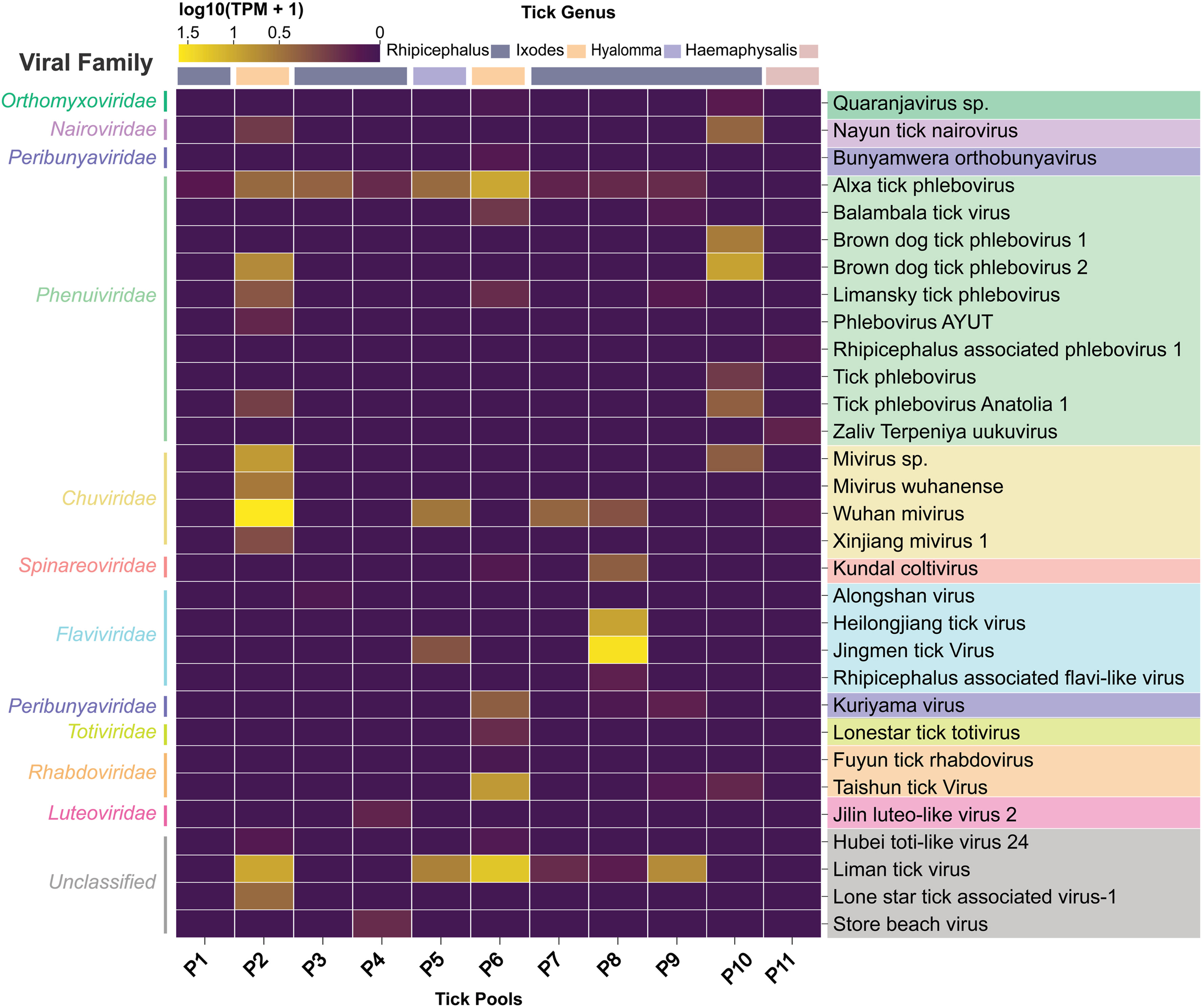


 DownLoad: