










-
Seoul virus (SEOV) (genus Hantavirus, family Bunyaviridae), which is mainly carried by Rattus norvegicus (Norway rat), is a major cause of hemorrhagic fever with renal syndrome (HFRS) in China. Currently, the Hantavirus genus includes 23 distinct species and 30 provisional species (Plyusnin et al., 2012). Hantaviruses are hosted and transmitted by rodents, insectivores, and bats (Zhang, 2014). In most cases, there is a “one hantavirus, one host” relationship. Both co-speciation (Plyusnin and Sironen, 2014) and host-switching (Ramsden et al., 2009) have had an important impact on hantavirus evolution (Guo et al., 2013).
Two human diseases are caused by hantaviruses: HFRS in Eurasia, and hantavirus pulmonary syndrome (HPS) in the Americas (Watson et al., 2014). Studies on the ecological and phylogenetic relationships between hantaviruses and their hosts have suggested that the distribution and evolution of the reservoir hosts play important roles in the geographic distribution and epidemiology of hantavirus-related diseases (Schlegel et al., 2012; Bennett et al., 2014; Yanagihara et al., 2014; Schmidt et al., 2016).
HFRS is highly endemic in China. Hantaan virus (HTNV), which is mainly carried by Apodemus agrarius (Striped Field Mouse), and SEOV, which is mainly carried by R. norvegicus, are the major causes of HFRS (Chen et al., 1986a; Song, 1999; Zhang et al., 2014a; Cao et al., 2016). Hubei province, which is located in the central south of China, has experienced some of the most severe epidemics of HFRS (Zhang, 1990; Zhang et al., 2014b). SEOV and HTNV co-circulate in Hubei (Kang et al., 2012). Phylogenetic analysis (based on partial S- and M-segment sequences) revealed that there are several lineages of SEOV and a novel genetic lineage of HTNV in Jiangxia, Xinzhou, Qichun and Nanzhang of Hubui (Li et al., 2012; Liu et al., 2012). Analysis of epidemiological data from Hubei has indicated that the HFRS cases that occurred in the 1980s and 1990s were mainly caused by HTNV, whereas the proportion of HFRS cases caused by SEOV increased greatly in the 2000s (Zhang et al., 2014b).
Mitochondria are involved in virus-host interaction processes, such as apoptosis (Neumann et al., 2015; Zan et al., 2016) and auto/mitophagy (Ruggieri et al., 2014). Mitochondrial DNA (mtDNA) activates several innate immune pathways involving Toll-like receptor 9 (TLR9), the Nod-like receptor family, pyrin domain containing 3 (NLRP3) inflammasome, and stimulator of interferon genes (STING) signaling. In addition to regulating antiviral signaling, mtDNA contributes to inflammatory diseases after cellular damage and stress (Fang et al., 2016).
Genetic analysis based on mtDNA sequences has been carried out to identify the animal species that act as hantavirus reservoirs and to clarify the evolutionary relationships among the reservoir hosts (Morzunov et al., 1998; Torres-Perez et al., 2010; Lin et al., 2012; Liu et al., 2012; Hugot et al., 2014; Schmidt et al., 2016). However, the association between SEOV infection and the mtDNA characteristics of the reservoir hosts in Hubei, China, has not been fully demonstrated. This information would provide a better understanding of the mtDNA genetic background of wild rats in Hubei, shed light on the relationship between SEOV infection and mtDNA genetic diversity, and could be valuable for the control of HFRS. To fill this gap, wild rats were captured in Hubei during 2000–2009 and 2014–2015. The lungs of the rats were screened for SEOV using specific reverse-transcription (RT)-PCR. The mitochondrial D-loop and cytochrome b (cyt-b) gene sequences were then identified from the lung tissues and subjected to phylogenetic analysis.
-
During 2000–2009 and 2014–2015, wild rats were captured with snap-traps, which were generally set at 5 m apart and baited with peanuts in both residential areas and fields. Trapping was conducted at five locations that are known to be HFRS epidemic areas in Hubei: Nanzhang (NZ), Yichang (YC), Xinzhou (XZ), Jiangxia (JX), and Qichun (QC) (Figure 1). All the animal research was conducted in accordance with internationally accepted principles and the Wuhan University Guidelines on the Care and Use of Laboratory Animals. The trapped animals were identified as described previously (Chen et al., 1986b). Lung tissues were collected and stored at –80 °C until use.
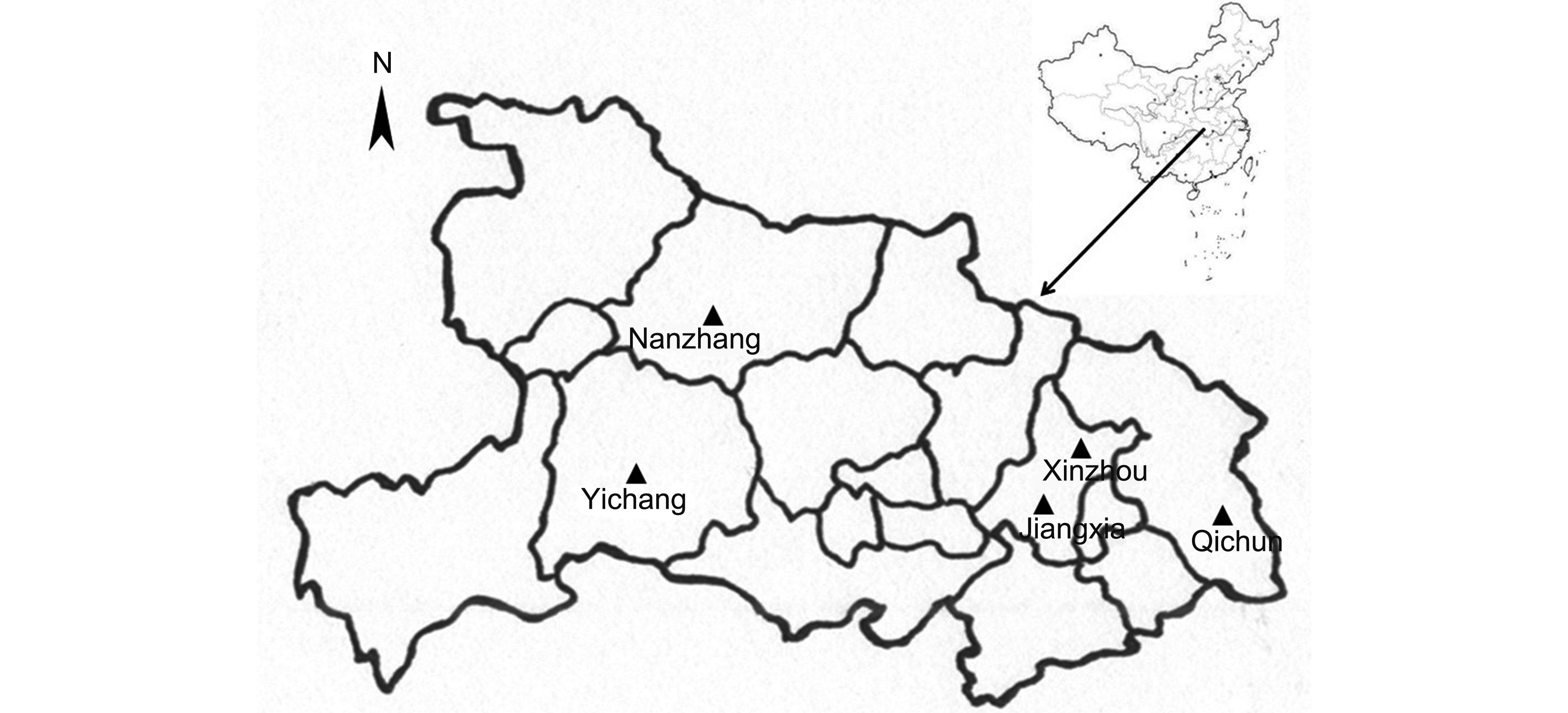
Figure 1. Map showing the trapping sites (▲) for wild rats in Hubei province, China.
-
Total RNA was extracted from the rodent lung tissues using an RNAprep Tissue Kit (Tiangen, Beijing, China). First-strand cDNA was generated from the total RNA using random primers and Moloney murine leukemia virus (MMLV) reverse transcriptase (Promega, Beijing, China). The SEOV partial S-segment sequences were amplified with primers S927F (5′-GATTGAAGATAT TGAGTCACC-3′) and S1168R (5′-GTTGTATCCCCATT GATTGTG-3′). The total volume of each PCR reaction was 50 µL, comprising 5 µL cDNA, 0.2 µmol/L of the forward and reverse primers, 200 µmol/L deoxynucleotide triphosphates (dNTPs), 1 unit Taq DNA polymerase (Tiangen, Beijing, China), 10 mmol/L Tris/HCl, (pH 8.3), 50 mmol/L KCl, and 1.5 mmol/L MgCl2. The PCR cycling conditions were as follows: 5 min at 94 °C; 30 cycles consisting of 45 s at 94 °C, 45 s at 55 °C, and 20 s at 72 °C; and a final extension step of 5 min at 72 °C. The PCR products were detected by running them on an agarose gel and staining them with ethidium bromide, and they were then view under ultraviolet light.
-
To verify the species carried by the hantavirus-infected rodents and to study their phylogenetic relationships, genomic DNA was extracted from the lung tissues using a DNAprep Tissue Kit (Tiangen, Beijing, China). The entire 899-nucleotide D-loop region of the mtDNA was amplified by PCR, using primers DF (5′-GTCAACT CCCAAAGCTGAAATTC-3′) and DR (5′-TCTCGAGATTTTCAGTGTCTTGCTTT-3′). The entire 1143-nucleotide cyt-b region of the mtDNA was amplified by PCR, using primers BF (5′-CGAAGCTTGATATGAAAAACCATCGTTG-3′) and BR (5′-AACTGCAGTC ATCTCCGGTTTACAAGAC-3′). The total volume of each PCR reaction was 50 µL, comprising 0.5 µg of DNA template, 0.1 µmol/L of each primer, 200 μmol/L of dNTPs, and 2 units of Taq DNA polymerase (Tiangen, Beijing, China). The cycling conditions consisted of an initial denaturation of 3 min at 94 °C; 35 cycles consisting of 1 min at 94 °C, 1 min at 50 °C, and 1 min at 72 °C; and a final extension step at 72 °C for 10 min. The PCR products were gel-purified, and sequenced using an ABI 3730 automatic sequencer (Torrance, CA, USA).
-
For the mtDNA D-loop and cyt-b sequences, several population parameters, i.e., haplotype number (h), haplotype diversity (h.d.), and nucleotide diversity (π), were calculated using DnaSP v5.0 (Librado and Rozas, 2009). All positions containing gaps and missing data were eliminated from the dataset.
-
Multiple sequence alignment was carried out using ClustalW (Larkin et al., 2007) with default parameters, and the analysis was revised using BioEdit 7.2 (Hall, 1999). D-loop or cyt-b sequences of rats from other parts of China and other countries were also included in the phylogenetic analysis. For each haplotype, one sequence was included in the phylogenetic analysis. The phylogenetic relationships for first the D-loop and then the cyt-b sequences were reconstructed using Bayesian Markov Chain Monte Carlo (MCMC) runs over 500,000 generations, as implemented in MrBayes 3.1 (Ronquist and Huelsenbeck, 2003). For both analyses, a majority rule (50%) consensus tree was constructed after burn-in of an initial 1250 trees. For both the mtDNA D-loop and cyt-b sequences, Microtus kikuchii (a species of vole that belongs to the family Cricetidea), was used as the outgroup to root the phylogenetic tree.
-
Using the likelihood ratio chi-square test, the SEOV-positive percentage among different geographic locations, different mtDNA haplotypes, and different mtDNA phylogenetic sub-lineages were evaluated, along with the geographic distribution of the mtDNA haplotypes.
-
The new mtDNA D-loop and cyt-b sequences of the rodents described in this study have been deposited in GenBank under accession numbers KY356101-KY356194, and MF062462-MF062465 (Supplementary Table S1). Other previously published sequences used in the study were obtained from GenBank (Supplementary Table S2).
-
During 2000–2009 and 2014–2015, 664 wild rats were captured from five trapping sites in Hubei. Using RT-PCR, 41 (6.17%) wild rats were found to be positive of SEOV infection (Table 1). The SEOV-positive percentage in Yichang was significantly lower than that in other areas (P < 0.01).
Site RT-PCRpositive Total Percentage Nanzhang 16 160 10.00 Yichang 1 126 0.79** Xinzhou 10 178 5.62 Jiangxia 7 125 5.60 Qichun 8 75 10.67 Total 41 664 6.17 Note: **P < 0.01 (chi-square test) Table 1. Detection of SEOV (using RT-PCR) in wild rats from Hubei, China
-
In this study, the D-loop and cyt-b genes of 103 rats were sequenced. Among these animals, 37 were SEOV positive. For both the D-loop and cyt-b genes, 18 haplotypes were identified (Tables 2, 3).
Haplotype Nanzhang Yichang Xinzhou Jiangxia Qichun All D1 4/14 (28.57) 1/7 (14.29) – – – 5/21 (23.81) D2 – – 4/19 (21.05) – – 4/19 (21.05) D3 6/9 (66.67) 0/9 (0) – – – 6/18 (33.33) D4 5/7 (71.43) – – – – 5/7 (71.43) D5 – – – 4/6 (66.67) 1/1 (100) 5/7 (71.43) D6 – – – – 3/6 (50.00) 3/6 (50.00) D7 – – 2/5 (40.00) – – 2/5 (40.00) D8 – – – – 0/4 (0) 0/4 (0) D9 – – 2/3 (66.67) – – 2/3 (66.67) D10 – – – – 1/2 (50.00) 1/2 (50.00) D11 – – 0/2 (0) – – 0/2 (0) D12 – – 1/2 (50.00) – – 1/2 (50.00) D13 – – – 1/1 (100.00) – 1/1 (100.00) D14 0/1 (0) – – – – 0/1 (0) D15 – – – – 1/1 (100.00) 1/1 (100.00) D16 – – – – 1/1 (100) 1/1 (100.00) D17 – – 0/1 (0) – – 0/1 (0) D18 – – – – 0/2 (0) 0/2 (0) All 15/31 (48.39) 1/16 (6.25) 9/32 (28.13) 5/7 (71.43) 7/17 (41.18) 37/103 (35.92) Note: For each cell, the figures are the no. of SEOV-positive rats/no. of sequenced rats (%). The chi-square test of the difference in the SEOV-positive percentage among the different haplotypes indicated no significant differences (P > 0.05).The chi-square test of the difference in the geographic distribution among the different haplotypes indicated a significant difference (P < 0.01). Table 2. Number of rats with each D-loop haplotype (D1–18) by geographic location
Haplotype Nanzhang Yichang Xinzhou Jiangxia Qichun All B1 5/14 (35.71) 1/7 (14.29) 1/2 (50.00) – – 7/23 (30.43) B2 6/9 (66.67) 0/9 (0) – 1/1 (100.00) – 7/19 (36.84) B3 – – 5/19 (26.32) – – 5/19 (26.32) B4 – – – – 1/6 (14.28) 1/6 (16.67) B5 – – – 4/6 (66.66) – 4/6 (66.66) B6 4/6 (66.66) – – – – 4/6 (66.66) B7 – – – – 3/6 (50.00) 3/6 (50.00) B8 – – 2/4 (50.00) – – 2/4 (50.00) B9 – – 0/3 (0) – – 0/3 (0) B10 – – 0/2 (0) – – 0/2 (0) B11 0/1 (0) – – – – 0/1 (0) B12 1/1 (100.00) – – – – 1/1 (100.00) B13 – – – – 1/1 (100.00) 1/1 (100.00) B14 – – – – 1/1 (100.00) 1/1 (100.00) B15 – – – – 1/1 (100.00) 1/1 (100.00) B16 – – 0/1 (0) – – 0/1 (0) B17 – – 0/1 (0) – – 0/1 (0) B18 – – – – 0/2 (0) 0/2 (0) All 16/31 (51.61) 1/16 (6.25) 8/32 (25.00) 5/7 (71.43) 7/17 (38.89) 37/103 (35.92) Note: For each cell, the figures are the no. of SEOV-positive rats/no. of sequenced rats (%). The chi-square test of the difference in the SEOV-positive percentage among the different haplotypes indicated no significant differences (P > 0.05).The chi-square test of the difference in the geographic distribution among the different haplotypes indicated a significant difference (P < 0.01). Table 3. Number of rats with each cyt-b haplotype (B1–18) by geographic location
Using Bayesian methods to reconstruct the phylogenetic relationships based on complete D-loop or cyt-b sequences allowed the rats to be categorized into two lineages, R. norvegicus and Rattus nitidus, both with high support values (Figure 2). Lineage R. norvegicus contained the majority of the rats, i.e., 101 rats, with 37 (36.63%) being SEOV positive. Lineage R. nitidus included two rats (both from Qichun in Hubei), both of which were SEOV negative.
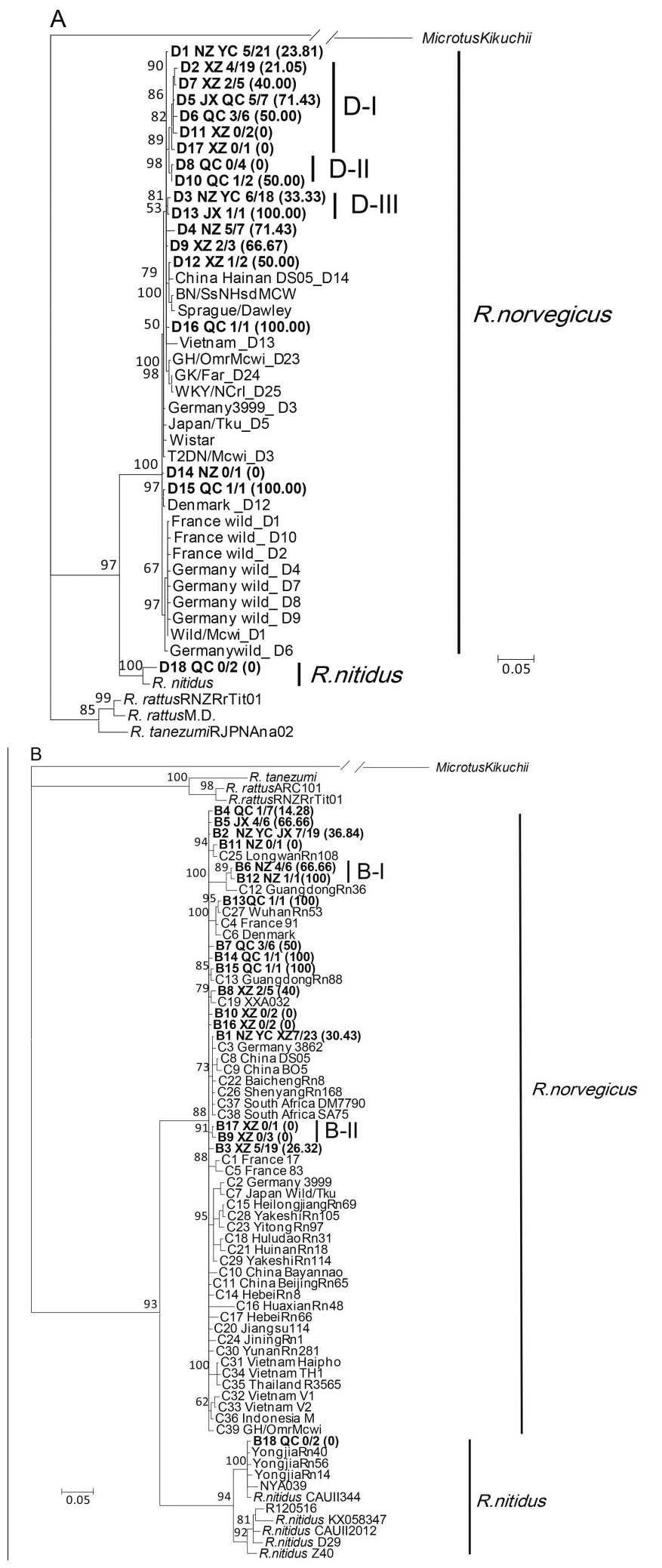
Figure 2. Bayesian reconstruction of (A) D-loop and (B) cyt-b phylogenetic trees. The haplotypes of mtDNA D-loop and cyt-b identified in this study are presented in boldface. The number of SEOV-positive rats/mumber of sequenced rats (percentage) and geographic locations are noted after each haplotype. The haplotype numbers of reference sequences (obtained from GenBank) are marked according to previous descriptions (Song et al.,2014). The branches are labeled with the Bayesian posterior possibilities (cut-off > 50%). The scale bar shows number of substitutions per mucleotide.
-
The lineage R. norvegicus consisted of 17 haplotypes, with a haplotype diversity of 1.00 ± 0.02 and a nucleotide diversity of 0.74 ± 0.08% (Table 4). Some of the rats from Hubei formed three sub-lineages, D-I to D-III, while the others could not be classified into clusters (Figure 2A). Sub-lineage D-I included 40 rats, with six haplotypes (D2, D5–D7, D11, and D17). Sub-lineage D-II included six rats, with two haplotypes. Sub-lineage D-III included 19 rats, with two haplotypes. There were 36 rats, with seven haplotypes (D-others), that were not classified into sub-lineages (Table 4). The SEOV-positive percentages for the sub-lineages were 35% (D-I), 16.67% (D-II), 36.84% (D-III), and 41.67% (D-others). There were no significant differences in the SEOV-positive percentages between the sub-lineages when evaluated with a chi-square test (P > 0.05).
Gene Lineage Na Nhb Sc Hdd (mean ± SD) πe (%) (mean ± SD) D-loop D-I 40 6 12 1.00 ± 0.10 0.47 ± 0.09 D-loop D-II 6 2 1 1.00 ± 0.50 0.11 ± 0.06 D-loop D-III 19 2 2 1.00 ± 0.50 0.22 ± 0.11 D-loop D-others 36 7 18 1.00 ± 0.76 0.65 ± 0.16 D-loop R. norvegicus 101 17 35 1.00 ± 0.02 0.74 ± 0.08 D-loop R. nitidus 2 1 0 0 NA D-loop All 103 18 88 1.00 ± 0.02 1.48 ± 0.64 cyt-b B-I 7 2 1 1.00 ± 0.50 0.09 ± 0.04 cyt-b B-II 4 2 1 1.00 ± 0.50 0.09 ± 0.04 cyt-b B-others 90 13 19 1.00 ± 0.03 0.33 ± 0.04 cyt-b R. norvegicus 101 17 31 1.00 ± 0.02 0.50 ± 0.10 cyt-b R. nitidus 2 1 0 0 NA cyt-b All 103 18 84 1.00 ± 0.02 1.04 ± 0.48 Note: aN, number of rats; bNh, number of haplotypes; cS, number of polymorphic (segregating) sites; dHd, haplotype diversity; eπ, nucleotide diversity; fNA, non-applicable, because the number of samples was less than seven. Table 4. Descriptive statistics of genetic variation of D-loop and cyt-b sequences of R. norvegicus and R. nitidus in Hubei, China
Haplotype D12 clustered with a rat from Hainan, China. Haplotype D15 clustered with a rat from Denmark. Other rats from Japan, France, and Germany did not cluster with any of the rats from Hubei in our study.
For each D-loop haplotype, the SEOV-positive percentage varied, but there were no significant differences when evaluated with a chi-square test (P > 0.05) (Table 2). Most of the rats in this study were in haplotypes D1–D3, and they were distributed in Nanzhang, Yichang, and Xinzhou. The numbers of D-loop haplotypes in Qichun (seven haplotypes) and Xinzhou (six haplotypes) were larger than that in any other area (Table 2, Figure 3A). The geographic distributions of the different D-loop haplotypes were significantly different when evaluated with a chi-square test (P < 0.01).

Figure 3. Geographic distribution of haplotypes of mtDNA (A) D-loop or (B) cyt-b. The geographic distributions among the different D-loop and cyt-b haplotypes were evaluated with chi-square tests, and there was a significant difference for both (P < 0.01).
-
The lineage R. norvegicus comprised 17 haplotypes, with a haplotype diversity of 1.00 ± 0.02 and a nucleotide diversity of 0.50 ± 0.10% (Table 4). Two sub-lineages, B-I and B-II, were formed. Sub-lineage B-I included six rats, with two haplotypes. Sub-lineage B-II involved four rats, with two haplotypes. There were 90 rats, with 13 haplotypes (B-others), that were not classified into sub-lineages (Figure 2B, Table 4). The SEOV-positive percentage for the sub-lineages were 71.42% (B-I), 0% (B-II), and 32.56% (B-others). There were no significant differences in the SEOV-positive percentages between the sub-lineages when evaluated with a chi-square test (P > 0.05).
Lineage B-I was closely related to a rat from Guangdong, China. Haplotype B13 clustered with a rat from Wuhan, Hubei, China (Lin et al., 2012), and two from Europe. Haplotype B11 clustered with a rat from Fujian, China (Lin et al., 2012). Other previously described rat cyt-b sequences did not cluster with any of the sequences in this study.
For each cyt-b haplotype, the SEOV-positive percentage varied, but there were no significant differences when evaluated with a chi-square test (P > 0.05) (Table 3). The haplotypes B1-B3 included most of the rats in this study, and they were distributed in Nanzhang, Yichang, Xinzhou, and Jiangxia. The numbers of cyt-b haplotypes in Xinzhou (seven haplotypes) and Qichun (six haplotypes) were larger than that in any of the other areas (Table 3, Figure 3B). The geographic distributions of different cyt-b haplotypes were significantly different when evaluated with a chi-square test (P < 0.01).
-
Norway rats are reservoir hosts for several zoonotic pathogens that infect humans, such as hantaviruses (particularly SEOV), hepatitis E virus, Leptospira interrogans, and Toxoplasma gondii (Meerburg et al., 2009). As the main reservoir of SEOV, the distribution of Norway rats determines the spread of SEOV (Lin et al., 2012). SEOV has been found across the world, from Asia (Kariwa et al., 1994; Ibrahim et al., 1996; Guo et al., 2016) to Africa (Avsic-Zupanc et al., 2015), Europe (Heyman et al., 2004; Heyman et al., 2009; Plyusnina et al., 2012; Dupinay et al., 2014), and the Americas (Childs et al., 1987; Cueto et al., 2008; Costa et al., 2014).
In the past, it was thought that Norway rats originated in the area bordering northern China and Mongolia (Hedrich, 2000; Lin et al., 2012). However, recent fossil analyses indicate that they may have originated in Southwestern China around 1.2–1.6 million years ago (Mya) (Jin et al., 2008; Wu and Wang, 2012). In addition, a phylogeographic analysis based on mtDNA cyt-b and D-loop sequences indicated that the Norway rat originated in southern China about 1.3 Mya (Song et al., 2014). The analysis of rat fossils collected in the Choukoutien Cave in northern China further indicated that the species arrived there about 0.14 Mya and was widely distributed across most of China and adjacent Asian countries about 0.01–0.13 Mya (Wu and Wang, 2012).
During the 15th century, Norway rats began their spread across the globe (Aplin et al., 2003). The Norway rats migrated to Europe in the 18th century (Barnett, 2002). They reached North America on the ships of the new settlers by the middle of the 18th century (Grzimek, 1968). The worldwide spread of Norway rats can be directly attributed to their relationship with humans (Robinson, 1965). The current worldwide distribution of the Norway rats followed the distribution of human activities, and it might have taken place within the last few centuries (Lin et al., 2012).
In China, HFRS is still serious public health problem even though comprehensive prevention measures have been implemented. HTNV and SEOV are the main causes of HFRS in China. SEOV-positive rats have been found in all the provinces of China except for Qinghai (Zhang et al., 2010; Hu et al., 2015). The proportion of SEOV-related HFRS cases increased greatly in the 2000s in Hubei (Zhang et al., 2014b).
In this study, using RT-PCR, SEOV was detected in rats captured in five areas in Hubei. The SEOV-positive percentage was 6.17%. The SEOV-positive percentage in Yichang was significantly lower than that in all the other areas (P < 0.01). It has previously been reported that rodent density and incidences of HFRS decreased and were maintained at low levels in the Three Gorges reservoir region, which includes Yichang (Chang et al., 2016). Further continuous surveillance will be needed to monitor hantavirus infections in rodent populations.
Mitochondrial genes are associated with the course of disease caused by several viruses. Hepatitis C virus persistence is strongly associated with mitochondrial dysfunction, with liver mtDNA genetic diversity being linked to disease progression (Campo et al., 2016). The Amerindian mtDNA haplogroup B2 enhances risk of cervical cancer caused by human papillomavirus, and deregulation of mitochondrial genes may be involved (Guardado-Estrada et al., 2012). The frequency of mtDNA D-loop mutations in non-neoplastic tissue was found to be higher in HBV-infected patients with hepatocellular carcinoma than in HBV non-infected patients with hepatocellular carcinoma (Gwak et al., 2011). Mitochondrial cyt-b is a mediator of FAS-induced apoptosis (Komarov et al., 2008). Forced expression of cyt-b mutations induces mitochondrial proliferation and prevents apoptosis in human uroepithelial SV-HUC-1 cells (Dasgupta et al., 2009). It has been reported that, according to phylogenetic trees based on mtDNA D-loop or cyt-b gene sequences of Apodemus agrarius, hantavirus-positive and hantavirus-negative mice belonged to the same cluster (Yang et al., 2016).
In this study, the reconstruction of the phylogenetic relationship between rats based on complete D-loop or cyt-b sequences allowed the rats to be categorized into two lineages, R. norvegicus and R. nitidus, with the former group containing the majority of the rats. These two species are sister species in the genus Rattus, and cannot be easily distinguished from one another. R. norvegicus lives with humans in and around residential areas, while R. nitidus lives only on farmland in hilly areas. In the mountainous areas of Guizhou, Yunan, Zhejiang, and Hunan provinces of China, hantaviruses were isolated from R. nitidus (Zou et al., 2008; Zhou et al., 2009; Lin et al., 2012). In this study, both of the rats that were categorized as R. nitidus were SEOV negative. More samples are therefore needed to clarify the level of hantavirus infection in R. nitidus in Hubei province.
The geographic distribution of the different mtDNA D-loop or cyt-b haplotypes were significantly different. This indicates that the mtDNA genes of rats vary in different areas of Hubei. For R. norvegicus, 17 haplotypes of mtDNA D-loop or cyt-b genes were identified in Hubei. There were no significant differences among the SEOV-positive percentages for the different haplotypes. There were three sub-lineages based on the D-loop sequences, and two based on the cyt-b sequences. The SEOV-positive percentages for the sub-lineages did not significantly differ. Further studies with immunity-related genes, such as major histocompatibility complex (MHC) class I, MHC class II, C4A component of the complement system, tumor necrosis factor (TNF), and interleukin-1 receptor antagonist (IL-1RA) (Charbonnel et al., 2014) may shed more light on the relationship between hantavirus infections and host genetic background.
-
This work was supported by grants from the National Natural Science Foundation of China (81402728, 81371865).
-
The authors declared that they have no conflict of interests. The study was approved by the Ethics Committees of School of Basic Medical Sciences, Wuhan University. All institutional and national guidelines for the care and use of laboratory animals were followed.
-
ZQY and DYL designed the experiments. JL, BYL, YYL, HRX and WH carried out the experiments. DYL analyzed the data. DYL and ZQY wrote the manuscript. All authors read and approved the final manuscript. Supplementary tables are available on the websites of Virologica Sinica: www.virosin.org; link.springer.com/journal/12250.
-
Haplotype GenBank number D1 MF062462 D2 MF062463 D3 MF062464 D4 KY356160 D5 KY356153 D6 KY356169 D7 KY356186 D8 KY356167 D9 KY356190 D10 KY356179 D11 KY356181 D12 KY356185 D13 HQ655894 D14 KY356156 D15 KY356174 D16 HQ655911 D17 KY356184 D18 KY356172 B1 KY356138 B2 KY356105 B3 MF062465 B4 KY356126 B5 KY356102 B6 KY356113 B7 KY356116 B8 KY356139 B9 KY356144 B10 KY356135 B11 KY356108 B12 KY356115 B13 KY356124 B14 KY356129 B15 KY356130 B16 KY356136 B17 KY356142 B18 KY356122 Table S1. GenBank number for each haplotype of mtDNA D-loop or cyt-b
Species Continent Country Sample location (if known) Strain or ID Gene Haplotype Sequence length (bp) GenBank No. Rattus
norvegicusEurope France – 83 D-loop D1 499 JX887169 Rattus
norvegicus– – – Wild/Mcwi D-loop D1 898 DQ673916 Rattus
norvegicusEurope France – 17 D-loop D2 664 JX887165 Rattus
norvegicusEurope Germany Ludwigshafen 3999 D-loop D3 664 JX887170 Rattus
norvegicus– – – T2DN/Mcwi D-loop D3 899 DQ673915 Rattus
norvegicusEurope Germany Drensteinfurt 3748 D-loop D4 664 JX887166 Rattus
norvegicusAsia Japan – Japan/Tku D-loop D5 664 DQ673917 Rattus
norvegicusEurope Germany Velen 3273 D-loop D6 664 JX887167 Rattus
norvegicusEurope Germany Magdeburg 3234 D-loop D7 654 JX887171 Rattus
norvegicusEurope Germany Dorsten 3599 D-loop D8 664 JX887173 Rattus
norvegicusEurope Germany Drensteinfurt 3493 D-loop D9 664 JX887174 Rattus
norvegicusEurope France – 111 D-loop D10 499 JX887172 Rattus
norvegicusEurope Denmark Copenhagen – D-loop D12 664 AJ428514 Rattus
norvegicusAsia Vietnam – specimen 947 D-loop D13 300 U13748 Rattus
norvegicusAsia China Hainan DS05 D-loop D14 469 HM031630 Rattus
norvegicus– – – GH/OmrMcwi D-loop D23 664 DQ673911 Rattus
norvegicus– – – GK/Far D-loop D24 664 DQ673912 Rattus
norvegicus– – – WKY/NCrl D-loop D25 664 DQ673907 Rattus
norvegicus– – – BN/SsNHsdMCW D-loop – 898 NC_001665 Rattus
norvegicus– – – Sprague/Dawley D-loop – 897 X04734 Rattus
norvegicus– – – Wistar D-loop – 899 X52757 Rattus
nitidusAsia China Sichuan – D-loop – 897 KX058347 Rattus
Rattus– – – RNZRrTit01 D-loop – 898 EU273707 Rattus
Rattus– – – M.D. D-loop – 898 X04735 Rattus
tanezumi– – – RJPNAna02 D-loop – 901 EU273712 Microtus
Kikuchii– – – – D-loop – 922 NC003041 Rattus
norvegicusEurope France – 17 cyt-b C1 549 JX887163 Rattus
norvegicusEurope Germany Ludwigshafen 3999 cyt-b C2 549 JX887164 Rattus
norvegicusEurope Germany Olfen 3862 cyt-b C3 549 JX887161 Rattus
norvegicusEurope France – 91 cyt-b C4 549 JX887160 Rattus
norvegicusEurope France – 83 cyt-b C5 549 JX887162 Rattus
norvegicusEurope Denmark – Denmark cyt-b C6 549 AJ428514 Rattus
norvegicusAsia Japan – – cyt-b C7 549 DQ673917 Rattus
norvegicusAsia China Hainan – cyt-b C8 549 HM031679 Rattus
norvegicusAsia China Hainan – cyt-b C9 549 HM031682 Rattus
norvegicusAsia China Inner Mongolia – cyt-b C10 549 GU592954 Rattus
norvegicusAsia China Hebei – cyt-b C11 549 GU592956 Rattus
norvegicusAsia China Guangdong – cyt-b C12 549 GU592960 Rattus
norvegicusAsia China Guangdong – cyt-b C13 549 GU592961 Rattus
norvegicusAsia China Hebei – cyt-b C14 549 GU592963 Rattus
norvegicusAsia China Heilongjiang – cyt-b C15 549 GU592964 Rattus
norvegicusAsia China Henan – cyt-b C16 549 GU592966 Rattus
norvegicusAsia China Hebei – cyt-b C17 549 GU592962 Rattus
norvegicusAsia China Liaoning – cyt-b C18 549 GU592970 Rattus
norvegicusAsia China Hunan – cyt-b C19 549 GU592974 Rattus
norvegicusAsia China Jiangsu – cyt-b C20 549 GU592975 Rattus
norvegicusAsia China Jilin – cyt-b C21 549 GU592979 Rattus
norvegicusAsia China Jilin – cyt-b C22 549 GU592980 Rattus
norvegicusAsia China Jilin – cyt-b C23 549 GU592981 Rattus
norvegicusAsia China Shandong – cyt-b C24 549 GU592982 Rattus
norvegicusAsia China Fujian – cyt-b C25 549 GU592983 Rattus
norvegicusAsia China Liaoning – cyt-b C26 549 GU592988 Rattus
norvegicusAsia China Hubei – cyt-b C27 549 GU592991 Rattus
norvegicusAsia China Inner Mongolia – cyt-b C28 549 GU592993 Rattus
norvegicusAsia China Inner Mongolia – cyt-b C29 549 GU592994 Rattus
norvegicusAsia China Yunnan – cyt-b C30 549 GU592997 Rattus
norvegicusAsia Vietnam – – cyt-b C31 549 AB355903 Rattus
norvegicusAsia Vietnam – – cyt-b C32 549 FJ842277 Rattus
norvegicusAsia Vietnam – – cyt-b C33 549 FJ842278 Rattus
norvegicusAsia Vietnam – – cyt-b C34 549 FR775887 Rattus
norvegicusAsia Thailand – – cyt-b C35 549 HM217429 Rattus
norvegicusAsia Indonesia – – cyt-b C36 549 FJ842279 Rattus
norvegicusAfrica South Africa – – cyt-b C37 549 FJ842274 Rattus
norvegicusAfrica South Africa – – cyt-b C38 549 DQ439839 Rattus
norvegicus– – – WKY/NCrl cyt-b C39 549 DQ673907 Rattus
nitidusAsia China Zhejiang YongjiaRn40 cyt-b – 1140 GU592990 Rattus
nitidusAsia China Zhejiang YongjiaRn14 cyt-b – 1140 GU592995 Rattus
nitidusAsia China Zhejiang YongjiaRn56 cyt-b – 1140 GU592965 Rattus
nitidusAsia China Hunan NYA039 cyt-b – 1140 GU592985 Rattus
nitidusAsia China Tibet R120516 cyt-b – 1143 KC735129 Rattus
nitidusAsia China – – cyt-b – 1140 KX058347 Rattus
nitidusAsia India Mao CAUII344 cyt-b – 1140 AB973108 Rattus
nitidusAsia India Ukhrul CAUII2012 cyt-b – 1140 AB973109 Rattus
nitidusAsia Viet Nam Dak Lak pr. Eawy D29 cyt-b – 1140 FR775883 Rattus
nitidusAsia Viet Nam Gia Lai pr, Pleiku Z40 cyt-b – 1140 FR775884 Rattus
tanezumi– – – RJPNAna02 9Oct06 cyt-b – 1140 EU273712 Rattus
RattusAfrica South Africa – ARC101 cyt-b – 1140 DQ439830 Rattus
Rattus– – – RNZRrTit01 cyt-b – 1140 EU273707 Microtuskukuchii – – – – cyt-b – 1143 AF348082 Table S2. The geographic origin, haplotype and length of reference sequences from GenBank
Phylogenetic analysis based on mitochondrial DNA sequences of wild rats, and the relationship with Seoul virus infection in Hubei, China
- Dong-Ying Liu 1,2,1,2 ,
- Jing Liu 3 ,
- Bing-Yu Liu 1 ,
- Yuan-Yuan Liu 1 ,
- Hai-Rong Xiong 1 ,
- Wei Hou 1 ,
-
Zhan-Qiu Yang
1,,

- Received Date: 29 December 2016
- Accepted Date: 01 June 2017
- Published Date: 26 June 2017
Abstract: Seoul virus (SEOV),which is predominantly carried by Rattus norvegicus,is one of the major causes of hemorrhagic fever with renal syndrome (HFRS) in China.Hubei province,located in the central south of China,has experienced some of the most severe epidemics of HFRS.To investigate the mitochondrial DNA (mtDNA)-based phylogenetics of wild rats in Hubei,and the relationship with SEOV infection,664 wild rats were captured from five trapping sites in Hubei from 2000-2009 and 2014-2015.Using reverse-transcription (RT)-PCR,41(6.17%) rats were found to be positive for SEOV infection.The SEOV-positive percentage in Yichang was significantly lower than that in other areas.The mtDNA D-loop and cytochrome b (cyt-b) genes of 103 rats were sequenced. Among these animals,37 were SEOV-positive.The reconstruction of the phylogenetic relationship (based on the complete D-loop and cyt-b sequences) allowed the rats to be categorized into two lineages,R.norvegicus and Rattus nitidus,with the former including the majority of the rats.For both the D-loop and cyt-b genes,18 haplotypes were identified.The geographic distributions of the different haplotypes were significantly different.There were no significant differences in the SEOVpositive percentages between different haplotypes.There were three sub-lineages for the D-loop, and two for cyt-b.The SEOV-positive percentages for each of the sub-lineages did not significantly differ.This indicates that the SEOV-positive percentage is not related to the mtDNA D-loop or cyt-b haplotype or the sub-lineage of rats from Hubei.

 DownLoad: