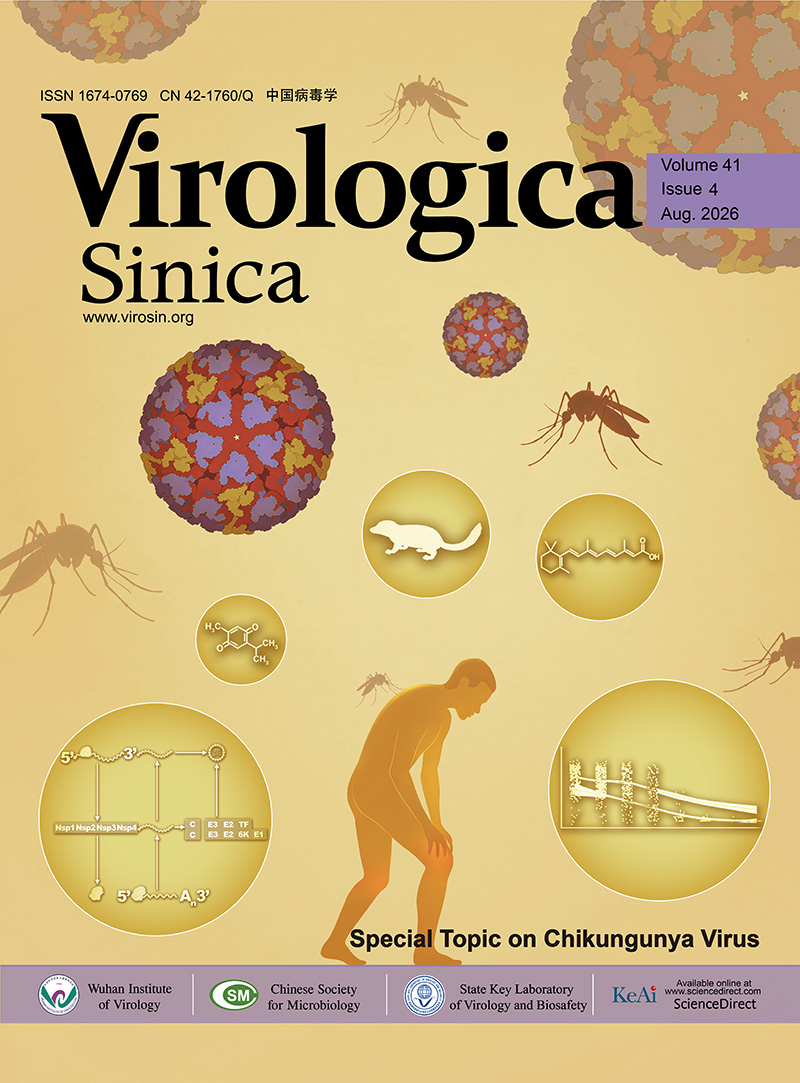
Mammals serve as vital reservoirs for human infectious diseases, with viral spillover events closely linked to ecological and climatic determinants. To elucidate the diversity and transmission dynamics of mammalian viruses, Shi et al. conducted a comprehensive meta-transcriptomic investigation across multiple small mammals—including bats, rodents, hedgehogs, and shrews—across 20 species in southern China. The study uncovered an extensive diversity of vertebrate-associated viruses, including numerous novel variants, with viral composition demonstrating significant variation across host species and geographical regions. This variation was principally governed by host taxonomic and ecological characteristics. The study identified bats as key hubs in viral transmission networks, with evidence of cross-species virus sharing. The cover image illustrates viral transmission networks among mammals in different ecological environment (Kindly designed and provided by Prof. Guangwen Cao and Dr. Yiwei Shi). See page 520-534 for details.
The 3CL protease, a highly conserved enzyme in the coronavirus, plays a crucial role in the viral life cycle by facilitating viral replication through precise cleavage of polyproteins. Beyond its proteolytic function, the 3CL protease also engages in intricate interactions with host cell proteins involved in critical cellular processes such as transcription, translation, and nuclear-cytoplasmic transport, effectively hijacking cellular machinery to promote viral replication. Additionally, it disrupts innate immune signaling pathways, suppresses interferon activity and cleaves antiviral proteins. Furthermore, it modulates host cell death pathways including pyroptosis and apoptosis, interferes with autophagy and inhibits stress granule formation to maintain viral infection and exacerbate viral pathogenesis. This review highlights the molecular mechanisms by which the 3CL protease orchestrates virus-host interactions, emphasizing its central role in coronavirus pathogenesis and highlighting potential therapeutic targets for future interventions.
Mammals are critical reservoirs of human infectious diseases and the spillover of viruses is related to climate conditions. We conducted meta-transcriptomic sequencing of 226 mammals (bats, rodents, hedgehogs, and shrews) representing 20 species collected across eight cities in south China between 2018 and 2024. Samples included internal organs, oropharyngeal and anal swabs, and feces. We identified 63 vertebrate-associated viruses, including 34 novel viruses. Phylogenetic analysis revealed six viruses with potential infection risks to humans or domestic animals due to their close phylogenetic relationships with known pathogens. Cross-species transmission was observed in 14.3% (9/63) of viruses, shared by at least two host species, with bats, particularly Rhinolophus and Hipposideros, serving as key hubs for viral circulation and zoonotic spillover. Virome composition varied substantially among mammalian species and geographic regions (adonis test, R2 = 0.50, P = 0.001). Generalized linear models quantified the roles of host taxonomy, ecotypes, and meteorological factors in shaping viral diversity, demonstrating host taxonomy (at the order level) as a predominant role (25.70% deviance explained), followed by ecotypes (10.27% deviance explained). Phylogenetic analysis conducted using our betacoronavirus sequences, as well as betacoronavirus sequences derived from 2.0 × 10⁴ bats sampled in China between July 2013 and March 2024, revealed that no betacoronaviruses exhibited closer phylogenetic relationships to SARS-CoV-2 than the known strains (e.g., RaTG13). These findings provide critical insights into virus evolution, transmission, and ecological determinants, which are essential for the prevention of emerging infectious diseases.
Influenza A virus (IAV) remains a global public health concern, causing influenza-like illness and severe respiratory tract infections. Two major subtypes, A/pdm09 H1N1 and A/H3N2, circulate globally, and their epidemics are influenced by multiple factors, especially during the COVID-19 pandemic. Based on data from the National Influenza Surveillance Program in China, we analyzed the epidemiological and genomic data in Tianjin collected from 2017 to 2025. A total of 77,473 throat swabs were collected, of which 9144 were IAV-positive. The A/pdm09 H1N1 and A/H3N2 lineages exhibited distinct epidemics across different influenza seasons, with a decline in cases observed during the COVID-19 pandemic. We sequenced the genomes of 128 A/pdm09 H1N1 and 113 A/H3N2 clinical isolates and characterized their temporal evolution and genetic diversity using time-scaled phylogenetic analysis. Additionally, we conducted a genetic risk evaluation of the hemagglutinin and neuraminidase segments, identifying key amino acid residues associated with viral adaptation, transmissibility, virulence, and drug resistance. Moreover, no antigenic variants were found in clinical isolates during the recent influenza seasons, though reduced sensitivity to oseltamivir and zanamivir was observed in individual strains. Our surveillance highlights the epidemiology and evolution of IAV before and after the COVID-19 pandemic in Tianjin.
The Japanese encephalitis virus (JEV) causes Japanese encephalitis (JE), a severe disease that primarily affects children and induces significant central nervous system complications. With the widespread adoption of vaccination in children, the incidence among older individuals has increased substantially. Despite this epidemiological shift, research on JEV infection in the elderly remains limited. We established JEV infection models using both aged and young mice to explore age-related differences in pathology and underlying mechanisms. Brain tissue samples were analyzed for pathological changes and viral tropism in major cell types. To further characterize immune response variations, we conducted transcriptomic sequencing on the brain tissues following JEV infection. Aged mice exhibited lower mortality, delayed disease progression, and milder brain pathology compared to young mice after JEV infection. Viral titers and infection rates of major brain cell types were similar in both groups. Transcriptomic analysis revealed diminished immune activation and weaker inflammatory responses in aged mice. Additionally, microglial activation and CD8+ T cell function were significantly reduced. Interestingly, JEV infection induced the selective recruitment of B cells in the brains of aged mice. These B cells may modulate the effects of CD8+ T cells in the disease process. Compared to young mice, aged mice showed enhanced resistance to JEV progression and reduced brain pathology. This resistance was associated with a weakened immune response in the aged brain, rather than differences in viral infection. The specific recruitment of B cells in the brains of aged mice may play a crucial role in limiting disease progression.
microRNAs (miRNAs) derived from viruses, have been detected in body fluids and are known to regulate the expression of host genes. Recent evidence indicates that SARS-CoV-2-encoded miRNAs could contribute to pulmonary disease. Pulmonary fibrosis is an important complication in SARS-CoV-2 infected patients, either during hospitalization or after discharge, however, the underlying mechanisms are not fully elucidated. Here, we report a SARS-CoV-2-encoded miRNA, miR-nsp3-3p, facilitates host pulmonary fibrosis by inhibiting expression of activated leukocyte cell adhesion molecule (ALCAM) and promoting epithelial-mesenchymal transition (EMT). First, we detected miR-nsp3-3p in clinical specimens and found it was remarkably increased in throat swabs and alveolar lavage fluids from severe/critical COVID-19 patients compared to control groups or mild/moderate patients. We further revealed that adeno-associated virus (AAV)-nsp3 infection can induce pulmonary fibrosis in BALB/c mice while miR-nsp3-3p antagomirs can reverse that, and ALCAM was found to be as a target gene of miR-nsp3-3p. miR-nsp3-3p overexpression can inhibit the expression of ALCAM and promote EMT of pulmonary epithelial cells. Moreover, overexpression of ALCAM can reverse the miR-nsp3-3p-induced EMT and fibrosis. These findings highlight the essential role of SARS-CoV-2-encoded miRNAs in promoting the pathological progression of lung disease, and provide novel insights into the interactions between viral miRNAs and host pathology.
SARS-CoV-2 infection and vaccination both trigger immune responses. The former leads to naturally acquired immunity, while the latter induces active immunity through artificial means. However, the distinct immune effects of vaccination and infection, as well as their underlying mechanisms, require further clarification. In this study, we compared the peripheral B cell differentiation, serological differences and the expression level of BCR signaling molecules between the vaccinated and recovered group. The vaccinated group exhibited reduced RBD-specific B cell differentiation and lower CD86 signal intensity on memory B cells, but enhanced BCR signaling in B cells. Regarding metabolic signaling, the vaccinated group had elevated expression levels of pS6, c-Myc, pmTOR, and pSTAT5, suggesting that the STAT5-c-Myc axis plays a role in regulating B cell metabolism. Additionally, proteome microarray analysis revealed that the serum of the vaccinated group contained higher levels of IgG antibodies against the SARS-CoV-2 N-Nter protein and IgA antibodies specific to the SARS-CoV-2 S1 protein. In summary, these findings indicate that the vaccinated group develops a more robust coronavirus-specific immune response, with enhanced BCR signaling and metabolic activity compared to the recovered group. These insights might contribute to the optimization of SARS-CoV-2 vaccine design.
To investigate the risk and influencing factors of long-term liver adverse events in chronic hepatitis B patients achieving hepatitis B surface antigen (HBsAg) clearance after pegylated interferon α (Peg-IFN α) treatment, a retrospective analysis was conducted on 456 patients at Beijing Ditan Hospital from 2008 to 2023 who achieved HBsAg clearance and discontinued Peg-IFN α treatment. The baseline was defined as the time of HBsAg clearance and treatment cessation. The endpoint was the first occurrence of liver adverse events (hepatocellular carcinoma or ascites) or last follow-up. Subsequently, we evaluated the incidence and risk factors of liver adverse events, along with changes in liver fibrosis, cirrhosis, and liver function indicators. During a median follow-up of 70 months, the incidence of liver adverse events was 2.30%, hepatocellular carcinoma 1.76%, and ascites 0.55%. Older age and cirrhosis were significant risk factors (HR 1.075 and 41.393, both P < 0.01). The APRI score significantly improved at follow-up compared to baseline (0.53 vs. 0.25, P < 0.001), and cirrhosis prevalence decreased from 5.70% to 0.88% (P < 0.001). In conclusion, patients who achieved HBsAg clearance and discontinued Peg-IFN α treatment have a low risk of liver adverse events, while advanced age and cirrhosis remain major risk factors.
The treatment of Acinetobacter baumannii (A. baumannii) poses significant clinical challenges due to its multidrug/pan-drug resistance. In this study, we isolated a broad-spectrum lytic A. baumannii phage, named P425, from medical wastewater, targeting nine multidrug-resistant A. baumannii (MDRAB) with diverse capsular types. Biological characterization revealed that P425 maintains activity at pH range of 3-12 and temperature range of 4-50 °C. It resists UV irradiation for 20 minutes, and had an optimal multiplicity of infection (OMOI) is 0.00001. The adsorption kinetics showed that P425 achieves > 90% within 10 minutes of incubation, and the one-step growth curve indicated a 10-min latent period, with a burst size of 184 PFU/cell. The genome sequencing results indicated that it harbors a double-stranded DNA genome of 40,583 bp with a GC content of 39.39%. Intergenomic similarity analysis classified it as a novel species within the Friunavirus genus, while electron microscopy results showed that it belongs to the Podoviridae family. Notably, P425 exhibits potent 24-h in vitro inhibitory activity against MDRAB, and demonstrates synergistic effect at an MOI of 0.001 when combined with five classes of antibiotics targeting distinct antimicrobial mechanisms. Safety evaluations confirmed the absence of cytotoxicity, hemolytic activity, or systemic toxicity both in vitro and in vivo. In mouse infection models, P425 can significantly improve the survival rates of mice infected with Ab25 (ST1791/KL101). When co-administered with levofloxacin, it achieved 100% protection against mortality and promoted immune recovery. Collectively, P425 is a prospective lytic phage that could offer novel strategies for combating MDRAB infections.
Ectromelia virus (ECTV), a member of the Orthopoxvirus genus, serves as both a causative agent of mousepox and a pivotal surrogate model for studying highly pathogenic orthopoxviruses. Although genomic data on ECTV remains limited, we report the isolation and characterization of a novel strain, ECTV-C-Tan-GD01, obtained from rodents in Guangdong Province, China. Nanopore sequencing yielded a complete genome (199 annotated genes, including one gene truncated at the C-terminus) with inverted terminal repeats (ITRs) harboring a conserved hairpin structure. Notably, a frameshift-inducing “G” deletion in the EV159 gene resulted in the truncation of a semaphorin-like protein. In vitro assays demonstrated cell-associated viral replication kinetics, with maximum titers achieved earlier in Vero/HeLa cells (72 h) than in BHK-21/CEF cells (84 h). Murine challenge experiments revealed extreme virulence (LD50 < 1 plaque-forming unit (PFU) via intranasal/footpad routes) and hepatosplenic tropism. Furthermore, ECTV-C-Tan-GD01 exhibited utility in evaluating orthopoxvirus countermeasures: a single dose of vaccinia virus Tiantan (VTT) or non-replicating vaccinia virus Tiantan (NTV) conferred cross-protection, while tecovirimat (ST-246), cidofovir (CDV), and brincidofovir (initially CMX001) significantly reduced viral loads and pathology. This study establishes ECTV-C-Tan-GD01 as a dual-purpose resource for probing orthopoxvirus evolution and advancing therapeutic development.
Rapid and accurate detection of infectious virus particles, not just viral nucleic acid, is essential to avoid unnecessary quarantine and effectively control the spread of viral diseases such as coronavirus disease 2019 (COVID-19), severe acute respiratory syndrome (SARS), and Middle East respiratory syndrome (MERS). Real-time quantitative polymerase chain reaction (RT-qPCR) was the most widely used detection technique during the COVID-19 outbreak. However, it cannot discriminate between intact infectious viruses and surface-distorted, non-infectious virus particles or naked viral RNA. In this study, we present a strategy for the specific detection of infectious coronaviruses by combining viral receptor capture and reverse transcription loop-mediated isothermal amplification (RT-LAMP). We successfully applied this strategy to detect infectious virus particles of the SARS-CoV-2 surrogate virus and the human coronavirus NL63 (HCoV-NL63). Virus particles were first captured on ELISA plates coated with the recombinant human angiotensin-converting enzyme 2 (hACE2) receptor. Viral RNA was then extracted from the particles and detected by RT-LAMP using virus-specific primers. In our experimental setting, the proposed method had a minimum detection limit (LOD) of 90 PFU/mL, sensitivity of 96.2%, and specificity of 100%. Our study provides a proof-of-concept that viral receptor capture combined with RT-LAMP can differentiate infectious coronaviruses from non-infectious virions or naked viral RNA. This paves the way for this virus detection strategy to become a mainstream tool for the management, prevention and control of epidemic coronavirus diseases.
Porcine epidemic diarrhea (PED), caused by porcine epidemic diarrhea virus (PEDV), is a highly contagious gastrointestinal disease characterized by vomiting, diarrhea, and dehydration, with mortality rates approaching 100% among suckling piglets. The PEDV 3C-like protease (3CLpro) is essential for viral replication and regarded as a critical target for antiviral inhibitor development. In this study, we aimed to identify small-molecule inhibitors of PEDV by targeting 3CLpro. Virtual screening of 1.6 million compounds from the ChemDiv library identified four potential candidates. Molecular dynamics simulations, specifically analyzing RMSD, RMSF, and Rg, demonstrated increased structural stability of the compound-protease complexes compared to the monomeric enzyme. All compounds had low cytotoxicity in Vero cells (CC50 > 200 μM). Fluorescence resonance energy transfer-based assays demonstrated dose-dependent inhibitory activity of the compounds against 3CLpro. Among the candidates, compound F366-0161 exhibited the weakest inhibition, with an IC50 value of 151.5 μM. Two analogues, 3238-0395 (IC50 of 121.4 μM) and L878-0493 (IC50 of 123.6 μM), exhibited moderately enhanced activity. Y041-1672 was identified as the most effective inhibitor, with an IC50 of 86.48 μM. In viral replication inhibition assays, Y041-1672 reduced PEDV replication, with an EC50 of 17.97 μM and a selectivity index (SI) of 15.5 (CC50/EC50). These results were validated by RT-qPCR, plaque assays, immunofluorescence, and Western blot analyses. In vitro validation confirmed Y041-1672 as the optimal antiviral candidate, and time-of-addition experiments indicated that inhibition primarily occurred during viral replication. This study identifies scaffold molecules for PEDV antiviral drug development, providing strategic insights for PED treatment.
Rift Valley fever virus (RVFV) is a high-containment pathogen that causes severe diseases in humans, with no approved therapeutics available. Its classification as a biosafety level 3 (BSL-3) agent has limited research and therapeutic development due to safety concerns. In this study, we developed a stable replicon cell line maintaining the replication of L and S genomic segments of RVFV. Single-cycle viral replicon particles (VRPs) could be efficiently packaged through trans-complementation of glycoproteins from different strains, recapitulating authentic viral entry and replication while minimizing biosafety risks. Using this system, we conducted high-throughput screening of a small-molecule compound library and identified CNX-1351 as an antiviral agent for multiple RNA viruses. Mechanistic studies revealed that CNX-1351 inhibits viral replication, potentially by targeting the PI3K-Akt signaling pathway. This single-cycle VRP system provides a valuable tool for studying RVFV biology, host interactions, antiviral and vaccine development under reduced biosafety constraints.
Quercetin is a natural compound with potent antiviral effects; however, its role in the treatment of herpes simplex keratitis (HSK) remains underexplored. Here, we investigated the antiviral effects of quercetin against herpes simplex virus 1 (HSV-1). By examining different phases of viral infection in human corneal epithelial cells (HCECs), we found that 30 μmol/L quercetin inhibits HSV-1 replication primarily by disrupting viral attachment. RNA-sequencing and subsequent analyses revealed that the nuclear factor E2-related factor 2 (Nrf2) was upregulated by quercetin in a dose-dependent manner. Knocking down Nrf2 partially compromised quercetin's antiviral effect. Importantly, topical application of 100 μmol/L quercetin alleviated HSK severity in mice, reduced viral titers in tears, and inhibited VP16 expression in the cornea and trigeminal ganglia. These findings demonstrate the antiviral effect of quercetin against HSV-1 and provide a foundation for mechanistic studies to elucidate its therapeutic potential in HSK.
Enterovirus D68 (EV-D68) and enterovirus A71 (EV-A71) are two major types of enteroviruses that pose emerging challenges to public health and have the potential to cause outbreaks, yet their pathogenic mechanisms remain largely unexplored. Arrestin domain containing 3 (ARRDC3) is a vital regulator of glucose metabolism, cancer development, and inflammation. Whether ARRDC3 contributes to innate antiviral immunity is undefined. Here, we found that enterovirus infection induces ARRDC3 expression at both the mRNA and protein levels, thereby inhibiting enterovirus replication. Moreover, we demonstrate that the expression of Yes-associated protein (YAP), a key effector of the Hippo pathway, is severely downregulated by ARRDC3 via lysosomal pathway. YAP facilitates enterovirus replication by suppressing the interferon pathway during the later stage of enterovirus infection, independent of its transcriptional activity. Finally, the ARRDC3-YAP pathway exhibits a broad-spectrum antiviral effect in various viral infections, including those caused by human parainfluenza virus type 3 (HPIV3) and vesicular stomatitis virus (VSV). Collectively, our results identify the critical role of ARRDC3 and its negative regulatory effect on YAP in the innate antiviral response, suggesting a novel therapeutic strategy against virus infection.
Highlights 1 The investigation demonstrated a high level of tolerance of EBOV to thermal disinfection. 2 A water-bath is recommended and the tubes should be fully submerged during the process. 3 The established inactivation guidelines should be followed very strictly.
Highlights 1 Two strains of FCV with distinct genotypes were successfully isolated and identified. 2 First identification of recombination between GI and GII. 3 Significant antigenic cross-reactivity with traditional vaccine strains.
Highlights 1 This study presents the first characterization and analysis of key host genes of SWPV from the Chinese lineage. 2 A SWPV strain (SWPV/AH/China/2024) was successfully isolated. 3 Genetic analysis shows Chinese SWPV strains form a unique branch vs.Indian and Western strains.
The serotype with the highest incidence during the 2016 dengue outbreak in Sinaloa was DENV-2, followed by DENV-4. This study represents the first report of the DENV-4 serotype in Sinaloa, Mexico, prior to 2022. Phylogenetic analysis clustered DENV-2 in Asian II genotype and DENV-4 in genotype I.