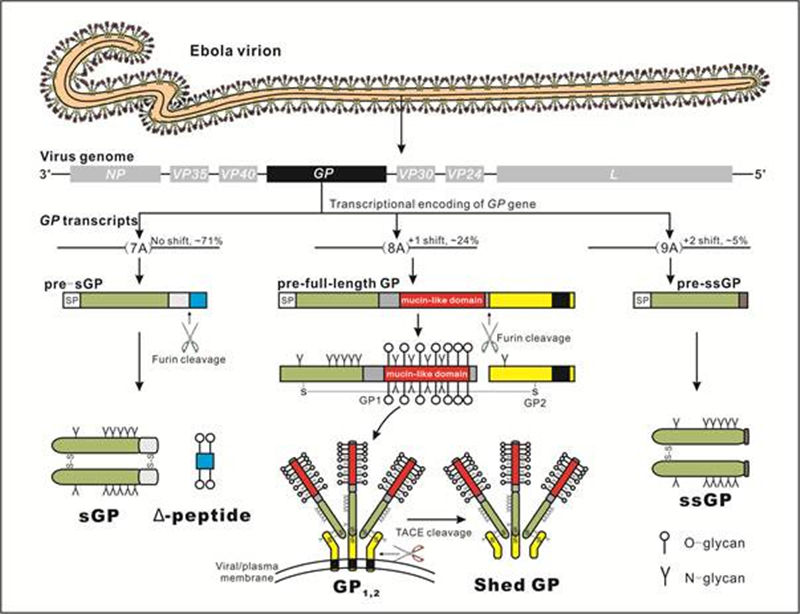
-
Ansari AA. 2014. Clinical features and pathobiology of Ebolavirus infection. J Autoimmun, 55: 1-9.
doi: 10.1016/j.jaut.2014.09.001
-
Audet J, Kobinger GP. 2015. Immune evasion in ebolavirus infections. Viral Immunol, 28: 10-18.
doi: 10.1089/vim.2014.0066
-
Baize S, Leroy EM, Georges-Courbot MC, Capron M, Lansoud-Soukate J, Debre P, Fisher-Hoch SP, McCormick JB, Georges AJ. 1999. Defective humoral responses and extensive intravascular apoptosis are associated with fatal outcome in Ebola virus-infected patients. Nat Med, 5: 423-426.
doi: 10.1038/7422
-
Baize S, Leroy EM, Georges AJ, Georges-Courbot MC, Capron M, Bedjabaga I, Lansoud-Soukate J, Mavoungou E. 2002. Inflammatory responses in Ebola virus-infected patients. Clin Exp Immunol, 128: 163-168.
doi: 10.1046/j.1365-2249.2002.01800.x
-
Barrientos LG, Martin AM, Rollin PE, Sanchez A. 2004. Disulfide bond assignment of the Ebola virus secreted glycoprotein SGP. Biochem Biophys Res Commun, 323: 696-702.
doi: 10.1016/j.bbrc.2004.08.148
-
Basler CF. 2015. Innate immune evasion by filoviruses. Virology, 479-480: 122-130.
doi: 10.1016/j.virol.2015.03.030
-
Becker Y. 1995. Retrovirus and filovirus " immunosuppressive motif" and the evolution of virus pathogenicity in HIV-1, HIV-2, and Ebola viruses. Virus Genes, 11: 191-195.
doi: 10.1007/BF01728658
-
Bornholdt ZA, Turner HL, Murin CD, Li W, Sok D, Souders CA, Piper AE, Goff A, Shamblin JD, Wollen SE, Sprague TR, Fusco ML, Pommert KB, Cavacini LA, Smith HL, Klempner M, Reimann KA, Krauland E, Gerngross TU, Wittrup KD, Saphire EO, Burton DR, Glass PJ, Ward AB, Walker LM. 2016. Isolation of potent neutralizing antibodies from a survivor of the 2014 Ebola virus outbreak. Science, 351: 1078-1083.
doi: 10.1126/science.aad5788
-
Borrow P, Martinez-Sobrido L, de la Torre JC. 2010. Inhibition of the type Ⅰ interferon antiviral response during arenavirus infection. Viruses, 2: 2443-2480.
doi: 10.3390/v2112443
-
Bosio CM, Moore BD, Warfield KL, Ruthel G, Mohamadzadeh M, Aman MJ, Bavari S. 2004. Ebola and Marburg virus-like particles activate human myeloid dendritic cells. Virology, 326: 280-287.
doi: 10.1016/j.virol.2004.05.025
-
Bray M, Geisbert TW. 2005. Ebola virus: the role of macrophages and dendritic cells in the pathogenesis of Ebola hemorrhagic fever. Int J Biochem Cell Biol, 37: 1560-1566.
doi: 10.1016/j.biocel.2005.02.018
-
Bukreyev AA, Chandran K, Dolnik O, Dye JM, Ebihara H, Leroy EM, Muhlberger E, Netesov SV, Patterson JL, Paweska JT, Saphire EO, Smither SJ, Takada A, Towner JS, Volchkov VE, Warren TK, Kuhn JH. 2014. Discussions and decisions of the 2012-2014 International Committee on Taxonomy of Viruses (ICTV) Filoviridae Study Group, January 2012-June 2013. Arch Virol, 159: 821-830.
doi: 10.1007/s00705-013-1846-9
-
Chan SY, Ma MC, Goldsmith MA. 2000. Differential induction of cellular detachment by envelope glycoproteins of Marburg and Ebola (Zaire) viruses. J Gen Virol, 81: 2155-2159.
doi: 10.1099/0022-1317-81-9-2155
-
Chertow DS, Kleine C, Edwards JK, Scaini R, Giuliani R, Sprecher A. 2014. Ebola virus disease in West Africa--clinical manifestations and management. N Engl J Med, 371: 2054-2057.
doi: 10.1056/NEJMp1413084
-
Cilloniz C, Ebihara H, Ni C, Neumann G, Korth MJ, Kelly SM, Kawaoka Y, Feldmann H, Katze MG. 2011. Functional genomics reveals the induction of inflammatory response and metalloproteinase gene expression during lethal Ebola virus infection. J Virol, 85: 9060-9068.
doi: 10.1128/JVI.00659-11
-
Cook JD, Lee JE. 2013. The secret life of viral entry glycoproteins: moonlighting in immune evasion. PLoS Pathog, 9: e1003258.
doi: 10.1371/journal.ppat.1003258
-
Corti D, Misasi J, Mulangu S, Stanley DA, Kanekiyo M, Wollen S, Ploquin A, Doria-Rose NA, Staupe RP, Bailey M, Shi W, Choe M, Marcus H, Thompson EA, Cagigi A, Silacci C, Fernandez-Rodriguez B, Perez L, Sallusto F, Vanzetta F, Agatic G, Cameroni E, Kisalu N, Gordon I, Ledgerwood JE, Mascola JR, Graham BS, Muyembe-Tamfun JJ, Trefry JC, Lanzavecchia A, Sullivan NJ. 2016. Protective monotherapy against lethal Ebola virus infection by a potently neutralizing antibody. Science, 351: 1339-1342.
doi: 10.1126/science.aad5224
-
de La Vega MA, Wong G, Kobinger GP, Qiu X. 2015. The multiple roles of sGP in Ebola pathogenesis. Viral Immunol, 28: 3-9.
doi: 10.1089/vim.2014.0068
-
Dias JM, Kuehne AI, Abelson DM, Bale S, Wong AC, Halfmann P, Muhammad MA, Fusco ML, Zak SE, Kang E, Kawaoka Y, Chandran K, Dye JM, Saphire EO. 2011. A shared structural solution for neutralizing ebolaviruses. Nat Struct Mol Biol, 18: 1424-1427.
doi: 10.1038/nsmb.2150
-
Dolnik O, Volchkova V, Garten W, Carbonnelle C, Becker S, Kahnt R, Stroher U, Klenk HD, Volchkov V. 2004. Ectodomain shedding of the glycoprotein GP of Ebola virus. Embo Journal, 23: 2175-2184.
doi: 10.1038/sj.emboj.7600219
-
Dolnik O, Volchkova VA, Escudero-Perez B, Lawrence P, Klenk HD, Volchkov VE. 2015. Shedding of Ebola Virus Surface Glycoprotein Is a Mechanism of Self-regulation of Cellular Cytotoxicity and Has a Direct Effect on Virus Infectivity. J Infect Dis, 212 Suppl 2: S322-328.
-
Elliott RM, Weber F. 2009. Bunyaviruses and the type Ⅰ interferon system. Viruses, 1: 1003-1021.
doi: 10.3390/v1031003
-
Errett JS, Gale M. 2015. Emerging complexity and new roles for the RIG-Ⅰ-like receptors in innate antiviral immunity. Virol Sin, 30: 163-173.
doi: 10.1007/s12250-015-3604-5
-
Escudero-Perez B, Volchkova VA, Dolnik O, Lawrence P, Volchkov VE. 2014. Shed GP of Ebola virus triggers immune activation and increased vascular permeability. PLoS Pathog, 10: e1004509.
doi: 10.1371/journal.ppat.1004509
-
Falzarano D, Feldmann H. 2015. Virology. Delineating Ebola entry. Science, 347: 947-948.
-
Falzarano D, Krokhin O, Wahl-Jensen V, Seebach J, Wolf K, Schnittler HJ, Feldmann H. 2006. Structure-function analysis of the soluble glycoprotein, sGP, of Ebola virus. Chembiochem, 7: 1605-1611.
doi: 10.1002/cbic.v7:10
-
Feldmann H, Geisbert TW. 2011. Ebola haemorrhagic fever. Lancet, 377: 849-862.
doi: 10.1016/S0140-6736(10)60667-8
-
Fitzpatrick K, Skasko M, Deerinck TJ, Crum J, Ellisman MH, Guatelli J. 2010. Direct restriction of virus release and incorporation of the interferon-induced protein BST-2 into HIV-1 particles. PLoS Pathog, 6: e1000701.
doi: 10.1371/journal.ppat.1000701
-
Francica JR, Matukonis MK, Bates P. 2009. Requirements for cell rounding and surface protein down-regulation by Ebola virus glycoprotein. Virology, 383: 237-247.
doi: 10.1016/j.virol.2008.10.029
-
Francica JR, Varela-Rohena A, Medvec A, Plesa G, Riley JL, Bates P. 2010. Steric shielding of surface epitopes and impaired immune recognition induced by the ebola virus glycoprotein. PLoS Pathog, 6.
-
Furuyama W, Marzi A, Nanbo A, Haddock E, Maruyama J, Miyamoto H, Igarashi M, Yoshida R, Noyori O, Feldmann H, Takada A. 2016. Discovery of an antibody for pan-ebolavirus therapy. Sci Rep, 6: 20514.
doi: 10.1038/srep20514
-
Gallaher WR, Garry RF. 2015. Modeling of the Ebola virus delta peptide reveals a potential lytic sequence motif. Viruses, 7: 285-305.
doi: 10.3390/v7010285
-
Geisbert TW, Hensley LE, Gibb TR, Steele KE, Jaax NK, Jahrling PB. 2000. Apoptosis induced in vitro and in vivo during infection by Ebola and Marburg viruses. Lab Invest, 80: 171-186.
doi: 10.1038/labinvest.3780021
-
Geisbert TW, Hensley LE, Larsen T, Young HA, Reed DS, Geisbert JB, Scott DP, Kagan E, Jahrling PB, Davis KJ. 2003. Pathogenesis of Ebola hemorrhagic fever in cynomolgus macaques: evidence that dendritic cells are early and sustained targets of infection. Am J Pathol, 163: 2347-2370.
doi: 10.1016/S0002-9440(10)63591-2
-
Gong X, Qian H, Zhou X, Wu J, Wan T, Cao P, Huang W, Zhao X, Wang X, Wang P, Shi Y, Gao GF, Zhou Q, Yan N. 2016. Structural Insights into the Niemann-Pick C1 (NPC1)-Mediated Cholesterol Transfer and Ebola Infection. Cell, 165: 1467-1478.
doi: 10.1016/j.cell.2016.05.022
-
Groseth A, Marzi A, Hoenen T, Herwig A, Gardner D, Becker S, Ebihara H, Feldmann H. 2012. The Ebola virus glycoprotein contributes to but is not sufficient for virulence in vivo. PLoS Pathog, 8: e1002847.
doi: 10.1371/journal.ppat.1002847
-
Gustin JK, Bai Y, Moses AV, Douglas JL. 2015. Ebola Virus Glycoprotein Promotes Enhanced Viral Egress by Preventing Ebola VP40 From Associating With the Host Restriction Factor BST2/Tetherin. J Infect Dis, 212 Suppl 2: S181-190.
-
Hammonds J, Wang JJ, Yi H, Spearman P. 2010. Immunoelectron microscopic evidence for Tetherin/BST2 as the physical bridge between HIV-1 virions and the plasma membrane. PLoS Pathog, 6: e1000749.
doi: 10.1371/journal.ppat.1000749
-
Han Z, Boshra H, Sunyer JO, Zwiers SH, Paragas J, Harty RN. 2003. Biochemical and functional characterization of the Ebola virus VP24 protein: implications for a role in virus assembly and budding. J Virol, 77: 1793-1800.
doi: 10.1128/JVI.77.3.1793-1800.2003
-
Harty RN, Brown ME, Wang G, Huibregtse J, Hayes FP. 2000. A PPxY motif within the VP40 protein of Ebola virus interacts physically and functionally with a ubiquitin ligase: implications for filovirus budding. Proc Natl Acad Sci U S A, 97: 13871-13876.
doi: 10.1073/pnas.250277297
-
Hinz A, Miguet N, Natrajan G, Usami Y, Yamanaka H, Renesto P, Hartlieb B, McCarthy AA, Simorre JP, Gottlinger H, Weissenhorn W. 2010. Structural basis of HIV-1 tethering to membranes by the BST-2/tetherin ectodomain. Cell Host Microbe, 7: 314-323.
doi: 10.1016/j.chom.2010.03.005
-
Howell KA, Qiu X, Brannan JM, Bryan C, Davidson E, Holtsberg FW, Wec AZ, Shulenin S, Biggins JE, Douglas R, Enterlein SG, Turner HL, Pallesen J, Murin CD, He S, Kroeker A, Vu H, Herbert AS, Fusco ML, Nyakatura EK, Lai JR, Keck ZY, Foung SK, Saphire EO, Zeitlin L, Ward AB, Chandran K, Doranz BJ, Kobinger GP, Dye JM, Aman MJ. 2016. Antibody Treatment of Ebola and Sudan Virus Infection via a Uniquely Exposed Epitope within the Glycoprotein Receptor-Binding Site. Cell Rep, 15: 1514-1526.
doi: 10.1016/j.celrep.2016.04.026
-
Ito H, Watanabe S, Takada A, Kawaoka Y. 2001. Ebola virus glycoprotein: proteolytic processing, acylation, cell tropism, and detection of neutralizing antibodies. J Virol, 75: 1576-1580.
doi: 10.1128/JVI.75.3.1576-1580.2001
-
Iwasa A, Shimojima M, Kawaoka Y. 2011. sGP serves as a structural protein in Ebola virus infection. J Infect Dis, 204 Suppl 3: S897-903.
-
Jeffers SA, Sanders DA, Sanchez A. 2002. Covalent modifications of the ebola virus glycoprotein. J Virol, 76: 12463-12472.
doi: 10.1128/JVI.76.24.12463-12472.2002
-
Jiang H, Wang J, Manicassamy B, Manicassamy S, Caffrey M, Rong L. 2009. The Role of the Charged Residues of the GP2 Helical Regions in Ebola Entry. Virol Sin, 24: 121-135.
doi: 10.1007/s12250-009-3015-6
-
Jouvenet N, Neil SJ, Zhadina M, Zang T, Kratovac Z, Lee Y, McNatt M, Hatziioannou T, Bieniasz PD. 2009. Broad-spectrum inhibition of retroviral and filoviral particle release by tetherin. J Virol, 83: 1837-1844.
doi: 10.1128/JVI.02211-08
-
Kaletsky RL, Francica JR, Agrawal-Gamse C, Bates P. 2009. Tetherin-mediated restriction of filovirus budding is antagonized by the Ebola glycoprotein. Proc Natl Acad Sci U S A, 106: 2886-2891.
doi: 10.1073/pnas.0811014106
-
Kindzelskii AL, Yang Z, Nabel GJ, Todd RF, 3rd, Petty HR. 2000. Ebola virus secretory glycoprotein (sGP) diminishes Fc gamma RⅢB-to-CR3 proximity on neutrophils. J Immunol, 164: 953-958.
doi: 10.4049/jimmunol.164.2.953
-
Kortepeter MG, Bausch DG, Bray M. 2011. Basic clinical and laboratory features of filoviral hemorrhagic fever. J Infect Dis, 204 Suppl 3: S810-816.
-
Kuhl A, Banning C, Marzi A, Votteler J, Steffen I, Bertram S, Glowacka I, Konrad A, Sturzl M, Guo JT, Schubert U, Feldmann H, Behrens G, Schindler M, Pohlmann S. 2011. The Ebola virus glycoprotein and HIV-1 Vpu employ different strategies to counteract the antiviral factor tetherin. J Infect Dis, 204 Suppl 3: S850-860.
-
Kupzig S, Korolchuk V, Rollason R, Sugden A, Wilde A, Banting G. 2003. Bst-2/HM1.24 is a raft-associated apical membrane protein with an unusual topology. Traffic, 4: 694-709.
-
Le Tortorec A, Willey S, Neil SJ. 2011. Antiviral inhibition of enveloped virus release by tetherin/BST-2: action and counteraction. Viruses, 3: 520-540.
doi: 10.3390/v3050520
-
Lee JE, Fusco ML, Hessell AJ, Oswald WB, Burton DR, Saphire EO. 2008. Structure of the Ebola virus glycoprotein bound to an antibody from a human survivor. Nature, 454: 177-182.
doi: 10.1038/nature07082
-
Lee JE, Saphire EO. 2009. Ebolavirus glycoprotein structure and mechanism of entry. Future Virol, 4: 621-635.
doi: 10.2217/fvl.09.56
-
Lennemann NJ, Rhein BA, Ndungo E, Chandran K, Qiu X, Maury W. 2014. Comprehensive functional analysis of N-linked glycans on Ebola virus GP1. MBio, 5: e00862-00813.
-
Lopez LA, Yang SJ, Exline CM, Rengarajan S, Haworth KG, Cannon PM. 2012. Anti-tetherin activities of HIV-1 Vpu and Ebola virus glycoprotein do not involve removal of tetherin from lipid rafts. J Virol, 86: 5467-5480.
doi: 10.1128/JVI.06280-11
-
Lopez LA, Yang SJ, Hauser H, Exline CM, Haworth KG, Oldenburg J, Cannon PM. 2010. Ebola virus glycoprotein counteracts BST-2/Tetherin restriction in a sequence-independent manner that does not require tetherin surface removal. J Virol, 84: 7243-7255.
doi: 10.1128/JVI.02636-09
-
Ma DY, Suthar MS. 2015. Mechanisms of innate immune evasion in re-emerging RNA viruses. Curr Opin Virol, 12: 26-37.
doi: 10.1016/j.coviro.2015.02.005
-
Mahanty S, Bray M. 2004. Pathogenesis of filoviral haemorrhagic fevers. Lancet Infect Dis, 4: 487-498.
doi: 10.1016/S1473-3099(04)01103-X
-
Martines RB, Ng DL, Greer PW, Rollin PE, Zaki SR. 2015. Tissue and cellular tropism, pathology and pathogenesis of Ebola and Marburg viruses. J Pathol, 235: 153-174.
doi: 10.1002/path.4456
-
Martinez O, Tantral L, Mulherkar N, Chandran K, Basler CF. 2011. Impact of Ebola mucin-like domain on antiglycoprotein antibody responses induced by Ebola virus-like particles. J Infect Dis, 204 Suppl 3: S825-832.
-
Martinez O, Valmas C, Basler CF. 2007. Ebola virus-like particle-induced activation of NF-kappaB and Erk signaling in human dendritic cells requires the glycoprotein mucin domain. Virology, 364: 342-354.
doi: 10.1016/j.virol.2007.03.020
-
Mehedi M, Falzarano D, Seebach J, Hu X, Carpenter MS, Schnittler HJ, Feldmann H. 2011. A new Ebola virus nonstructural glycoprotein expressed through RNA editing. J Virol, 85: 5406-5414.
doi: 10.1128/JVI.02190-10
-
Messaoudi I, Amarasinghe GK, Basler CF. 2015. Filovirus pathogenesis and immune evasion: insights from Ebola virus and Marburg virus. Nat Rev Microbiol, 13: 663-676.
-
Misasi J, Gilman MS, Kanekiyo M, Gui M, Cagigi A, Mulangu S, Corti D, Ledgerwood JE, Lanzavecchia A, Cunningham J, Muyembe-Tamfun JJ, Baxa U, Graham BS, Xiang Y, Sullivan NJ, McLellan JS. 2016. Structural and molecular basis for Ebola virus neutralization by protective human antibodies. Science, 351: 1343-1346.
doi: 10.1126/science.aad6117
-
Mohan GS, Li W, Ye L, Compans RW, Yang C. 2012. Antigenic subversion: a novel mechanism of host immune evasion by Ebola virus. PLoS Pathog, 8: e1003065.
doi: 10.1371/journal.ppat.1003065
-
Mohan GS, Ye L, Li W, Monteiro A, Lin X, Sapkota B, Pollack BP, Compans RW, Yang C. 2015. Less is more: Ebola virus surface glycoprotein expression levels regulate virus production and infectivity. J Virol, 89: 1205-1217.
doi: 10.1128/JVI.01810-14
-
Moller-Tank S, Maury W. 2015. Ebola virus entry: a curious and complex series of events. PLoS Pathog, 11: e1004731.
doi: 10.1371/journal.ppat.1004731
-
Nakayama E, Saijo M. 2013. Animal models for Ebola and Marburg virus infections. Front Microbiol, 4: 267.
-
Ning YJ, Feng K, Min YQ, Cao WC, Wang M, Deng F, Hu Z, Wang H. 2015. Disruption of type Ⅰ interferon signaling by the nonstructural protein of severe fever with thrombocytopenia syndrome virus via the hijacking of STAT2 and STAT1 into inclusion bodies. J Virol, 89: 4227-4236.
doi: 10.1128/JVI.00154-15
-
Ning YJ, Wang M, Deng M, Shen S, Liu W, Cao WC, Deng F, Wang YY, Hu Z, Wang H. 2014. Viral suppression of innate immunity via spatial isolation of TBK1/IKKepsilon from mitochondrial antiviral platform. J Mol Cell Biol, 6: 324-337.
doi: 10.1093/jmcb/mju015
-
Okumura A, Pitha PM, Yoshimura A, Harty RN. 2010. Interaction between Ebola virus glycoprotein and host toll-like receptor 4 leads to induction of proinflammatory cytokines and SOCS1. J Virol, 84: 27-33.
doi: 10.1128/JVI.01462-09
-
Pallesen J, Murin CD, de Val N, Cottrell CA, Hastie KM, Turner HL, Fusco ML, Flyak AI, Zeitlin L, Crowe JE, Jr., Andersen KG, Saphire EO, Ward AB. 2016. Structures of Ebola virus GP and sGP in complex with therapeutic antibodies. Nat Microbiol, 1: 16128.
doi: 10.1038/nmicrobiol.2016.128
-
Panchal RG, Ruthel G, Kenny TA, Kallstrom GH, Lane D, Badie SS, Li L, Bavari S, Aman MJ. 2003. In vivo oligomerization and raft localization of Ebola virus protein VP40 during vesicular budding. Proc Natl Acad Sci U S A, 100: 15936-15941.
doi: 10.1073/pnas.2533915100
-
Perez-Caballero D, Zang T, Ebrahimi A, McNatt MW, Gregory DA, Johnson MC, Bieniasz PD. 2009. Tetherin inhibits HIV-1 release by directly tethering virions to cells. Cell, 139: 499-511.
doi: 10.1016/j.cell.2009.08.039
-
Peters CJ, LeDuc JW. 1999. An introduction to Ebola: the virus and the disease. J Infect Dis, 179 Suppl 1: ix-xvi.
-
Qiu X, Wong G, Audet J, Bello A, Fernando L, Alimonti JB, Fausther-Bovendo H, Wei H, Aviles J, Hiatt E, Johnson A, Morton J, Swope K, Bohorov O, Bohorova N, Goodman C, Kim D, Pauly MH, Velasco J, Pettitt J, Olinger GG, Whaley K, Xu B, Strong JE, Zeitlin L, Kobinger GP. 2014. Reversion of advanced Ebola virus disease in nonhuman primates with ZMapp. Nature, 514: 47-53.
-
Radoshitzky SR, Warfield KL, Chi X, Dong L, Kota K, Bradfute SB, Gearhart JD, Retterer C, Kranzusch PJ, Misasi JN, Hogenbirk MA, Wahl-Jensen V, Volchkov VE, Cunningham JM, Jahrling PB, Aman MJ, Bavari S, Farzan M, Kuhn JH. 2011. Ebolavirus delta-peptide immunoadhesins inhibit marburgvirus and ebolavirus cell entry. J Virol, 85: 8502-8513.
doi: 10.1128/JVI.02600-10
-
Randall RE, Goodbourn S. 2008. Interferons and viruses: an interplay between induction, signalling, antiviral responses and virus countermeasures. J Gen Virol, 89: 1-47.
doi: 10.1099/vir.0.83391-0
-
Reynard O, Borowiak M, Volchkova VA, Delpeut S, Mateo M, Volchkov VE. 2009. Ebolavirus glycoprotein GP masks both its own epitopes and the presence of cellular surface proteins. J Virol, 83: 9596-9601.
doi: 10.1128/JVI.00784-09
-
Ritchie G, Harvey DJ, Stroeher U, Feldmann F, Feldmann H, Wahl-Jensen V, Royle L, Dwek RA, Rudd PM. 2010. Identification of N-glycans from Ebola virus glycoproteins by matrix-assisted laser desorption/ionisation time-of-flight and negative ion electrospray tandem mass spectrometry. Rapid Commun Mass Spectrom, 24: 571-585.
doi: 10.1002/rcm.v24:5
-
Rougeron V, Feldmann H, Grard G, Becker S, Leroy EM. 2015. Ebola and Marburg haemorrhagic fever. J Clin Virol, 64: 111-119.
doi: 10.1016/j.jcv.2015.01.014
-
Sadler AJ, Williams BR. 2008. Interferon-inducible antiviral effectors. Nat Rev Immunol, 8: 559-568.
doi: 10.1038/nri2314
-
Sanchez A, Trappier SG, Mahy BW, Peters CJ, Nichol ST. 1996. The virion glycoproteins of Ebola viruses are encoded in two reading frames and are expressed through transcriptional editing. Proc Natl Acad Sci U S A, 93: 3602-3607.
doi: 10.1073/pnas.93.8.3602
-
Sanchez A, Yang ZY, Xu L, Nabel GJ, Crews T, Peters CJ. 1998. Biochemical analysis of the secreted and virion glycoproteins of Ebola virus. J Virol, 72: 6442-6447.
-
Sanchez AJ, Vincent MJ, Erickson BR, Nichol ST. 2006. Crimean-congo hemorrhagic fever virus glycoprotein precursor is cleaved by Furin-like and SKI-1 proteases to generate a novel 38-kilodalton glycoprotein. Journal of Virology, 80: 514-525.
-
Schneider WM, Chevillotte MD, Rice CM. 2014. Interferon-stimulated genes: a complex web of host defenses. Annu Rev Immunol, 32: 513-545.
doi: 10.1146/annurev-immunol-032713-120231
-
Schnittler HJ, Feldmann H. 1998. Marburg and Ebola hemorrhagic fevers: does the primary course of infection depend on the accessibility of organ-specific macrophages? Clin Infect Dis, 27: 404-406.
doi: 10.1086/cid.1998.27.issue-2
-
Shurtleff AC, Bavari S. 2015. Animal models for ebolavirus countermeasures discovery: what defines a useful model? Expert Opin Drug Discov, 10: 685-702.
doi: 10.1517/17460441.2015.1035252
-
Simmons G, Wool-Lewis RJ, Baribaud F, Netter RC, Bates P. 2002. Ebola virus glycoproteins induce global surface protein down-modulation and loss of cell adherence. J Virol, 76: 2518-2528.
doi: 10.1128/jvi.76.5.2518-2528.2002
-
Singh G, Kumar A, Singh K, Kaur J. 2015. Ebola virus: an introduction and its pathology. Rev Med Virol.
-
Stark GR. 2007. How cells respond to interferons revisited: from early history to current complexity. Cytokine Growth Factor Rev, 18: 419-423.
doi: 10.1016/j.cytogfr.2007.06.013
-
Sui J, Marasco WA. 2002. Evidence against Ebola virus sGP binding to human neutrophils by a specific receptor. Virology, 303: 9-14.
doi: 10.1006/viro.2002.1715
-
Takada A. 2012. Filovirus tropism: cellular molecules for viral entry. Front Microbiol, 3: 34.
-
Takada A, Watanabe S, Ito H, Okazaki K, Kida H, Kawaoka Y. 2000. Downregulation of beta1 integrins by Ebola virus glycoprotein: implication for virus entry. Virology, 278: 20-26.
doi: 10.1006/viro.2000.0601
-
Tang H. 2016. Uncovering the mystery of Ebola virus entry: Lock and key. Sci China Life Sci, 59: 434-435.
doi: 10.1007/s11427-016-5033-6
-
To KKW, Chan JFW, Tsang AKL, Cheng VCC, Yuen KY. 2015. Ebola virus disease: a highly fatal infectious disease reemerging in West Africa. Microbes and Infection, 17: 84-97.
doi: 10.1016/j.micinf.2014.11.007
-
Tokarev A, Skasko M, Fitzpatrick K, Guatelli J. 2009. Antiviral activity of the interferon-induced cellular protein BST-2/tetherin. AIDS Res Hum Retroviruses, 25: 1197-1210.
-
U.S. Centers for Disease Control and Prevention. 2016a. 2014 Ebola outbreak in West Africa -case counts. Available: http://www.cdc.gov/vhf/ebola/outbreaks/2014-west-africa/case-counts.html. Accessed: April 14, 2016.
-
U.S. Centers for Disease Control and Prevention. 2016b. Cost of the Ebola epidemic. Available: http://www.cdc.gov/vhf/ebola/outbreaks/2014-west-africa/cost-of-ebola.htmlAccessed: May 3, 2016.
-
Van Damme N, Goff D, Katsura C, Jorgenson RL, Mitchell R, Johnson MC, Stephens EB, Guatelli J. 2008. The interferon-induced protein BST-2 restricts HIV-1 release and is downregulated from the cell surface by the viral Vpu protein. Cell Host Microbe, 3: 245-252.
doi: 10.1016/j.chom.2008.03.001
-
Vande Burgt NH, Kaletsky RL, Bates P. 2015. Requirements within the Ebola Viral Glycoprotein for Tetherin Antagonism. Viruses, 7: 5587-5602.
doi: 10.3390/v7102888
-
Volchkov VE. 1999. Processing of the Ebola virus glycoprotein. Curr Top Microbiol Immunol, 235: 35-47.
-
Volchkov VE, Becker S, Volchkova VA, Ternovoj VA, Kotov AN, Netesov SV, Klenk HD. 1995. GP mRNA of Ebola virus is edited by the Ebola virus polymerase and by T7 and vaccinia virus polymerases. Virology, 214: 421-430.
doi: 10.1006/viro.1995.0052
-
Volchkov VE, Blinov VM, Netesov SV. 1992. The envelope glycoprotein of Ebola virus contains an immunosuppressive-like domain similar to oncogenic retroviruses. FEBS Lett, 305: 181-184.
doi: 10.1016/0014-5793(92)80662-Z
-
Volchkov VE, Feldmann H, Volchkova VA, Klenk HD. 1998a. Processing of the Ebola virus glycoprotein by the proprotein convertase furin. Proc Natl Acad Sci U S A, 95: 5762-5767.
doi: 10.1073/pnas.95.10.5762
-
Volchkov VE, Volchkova VA, Muhlberger E, Kolesnikova LV, Weik M, Dolnik O, Klenk HD. 2001. Recovery of infectious Ebola virus from complementary DNA: RNA editing of the GP gene and viral cytotoxicity. Science, 291: 1965-1969.
doi: 10.1126/science.1057269
-
Volchkov VE, Volchkova VA, Slenczka W, Klenk HD, Feldmann H. 1998b. Release of viral glycoproteins during Ebola virus infection. Virology, 245: 110-119.
doi: 10.1006/viro.1998.9143
-
Volchkova VA, Klenk HD, Volchkov VE. 1999. Delta-peptide is the carboxy-terminal cleavage fragment of the nonstructural small glycoprotein sGP of Ebola virus. Virology, 265: 164-171.
doi: 10.1006/viro.1999.0034
-
Wahl-Jensen V, Kurz SK, Hazelton PR, Schnittler HJ, Stroher U, Burton DR, Feldmann H. 2005a. Role of Ebola virus secreted glycoproteins and virus-like particles in activation of human macrophages. J Virol, 79: 2413-2419.
doi: 10.1128/JVI.79.4.2413-2419.2005
-
Wahl-Jensen VM, Afanasieva TA, Seebach J, Stroher U, Feldmann H, Schnittler HJ. 2005b. Effects of Ebola virus glycoproteins on endothelial cell activation and barrier function. J Virol, 79: 10442-10450.
doi: 10.1128/JVI.79.16.10442-10450.2005
-
Wang H, Shi Y, Song J, Qi J, Lu G, Yan J, Gao GF. 2016. Ebola Viral Glycoprotein Bound to Its Endosomal Receptor Niemann-Pick C1. Cell, 164: 258-268.
doi: 10.1016/j.cell.2015.12.044
-
Wang J, Manicassamy B, Caffrey M, Rong L. 2011. Characterization of the receptor-binding domain of Ebola glycoprotein in viral entry. Virol Sin, 26: 156-170.
doi: 10.1007/s12250-011-3194-9
-
Wec AZ, Nyakatura EK, Herbert AS, Howell KA, Holtsberg FW, Bakken RR, Mittler E, Christin JR, Shulenin S, Jangra RK, Bharrhan S, Kuehne AI, Bornholdt ZA, Flyak AI, Saphire EO, Crowe JE, Jr., Aman MJ, Dye JM, Lai JR, Chandran K. 2016. A " Trojan horse" bispecific antibody strategy for broad protection against ebolaviruses. Science.
-
Wertheim JO, Worobey M. 2009. Relaxed selection and the evolution of RNA virus mucin-like pathogenicity factors. J Virol, 83: 4690-4694.
doi: 10.1128/JVI.02358-08
-
White JM, Whittaker GR. 2016. Fusion of Enveloped Viruses in Endosomes. Traffic, 17: 593-614.
doi: 10.1111/tra.2016.17.issue-6
-
Wilson JA, Hevey M, Bakken R, Guest S, Bray M, Schmaljohn AL, Hart MK. 2000. Epitopes involved in antibody-mediated protection from Ebola virus. Science, 287: 1664-1666.
doi: 10.1126/science.287.5458.1664
-
Wool-Lewis RJ, Bates P. 1999. Endoproteolytic processing of the ebola virus envelope glycoprotein: cleavage is not required for function. J Virol, 73: 1419-1426.
-
Yaddanapudi K, Palacios G, Towner JS, Chen I, Sariol CA, Nichol ST, Lipkin WI. 2006. Implication of a retrovirus-like glycoprotein peptide in the immunopathogenesis of Ebola and Marburg viruses. Faseb Journal, 20: 2519-2530.
doi: 10.1096/fj.06-6151com
-
Yang ZY, Duckers HJ, Sullivan NJ, Sanchez A, Nabel EG, Nabel GJ. 2000. Identification of the Ebola virus glycoprotein as the main viral determinant of vascular cell cytotoxicity and injury. Nat Med, 6: 886-889.
doi: 10.1038/78645
-
Ye J, Zhu B, Fu ZF, Chen H, Cao S. 2013. Immune evasion strategies of flaviviruses. Vaccine, 31: 461-471.
doi: 10.1016/j.vaccine.2012.11.015
-
Ye L, Lin JG, Sun YL, Bennouna S, Lo M, Wu QY, Bu ZG, Pulendran B, Compans RW, Yang CL. 2006. Ebola virus-like particles produced in insect cells exhibit dendritic cell stimulating activity and induce neutralizing antibodies. Virology, 351: 260-270.
doi: 10.1016/j.virol.2006.03.021
-
Zaki SR, Goldsmith CS. 1999. Pathologic features of filovirus infections in humans. Curr Top Microbiol Immunol, 235: 97-116.
-
Zhao D, Han X, Zheng X, Wang H, Yang Z, Liu D, Han K, Liu J, Wang X, Yang W, Dong Q, Yang S, Xia X, Tang L, He F. 2016. The Myeloid LSECtin Is a DAP12-Coupled Receptor That Is Crucial for Inflammatory Response Induced by Ebola Virus Glycoprotein. PLoS Pathog, 12: e1005487.
doi: 10.1371/journal.ppat.1005487