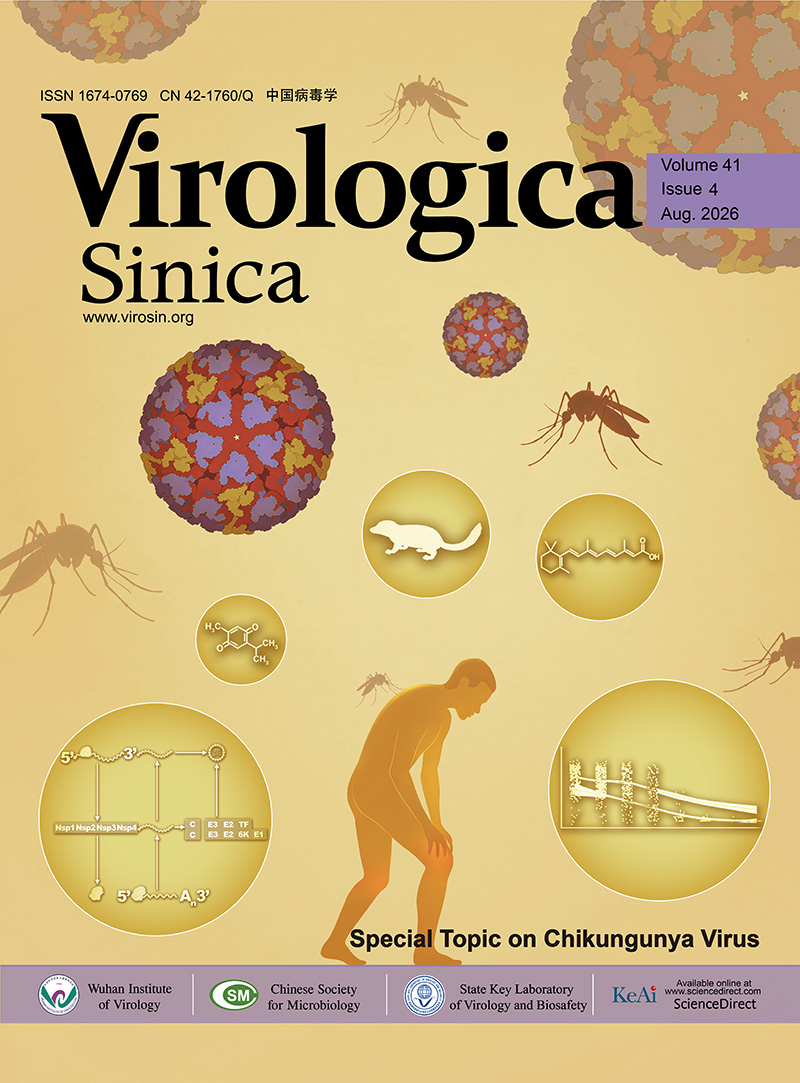
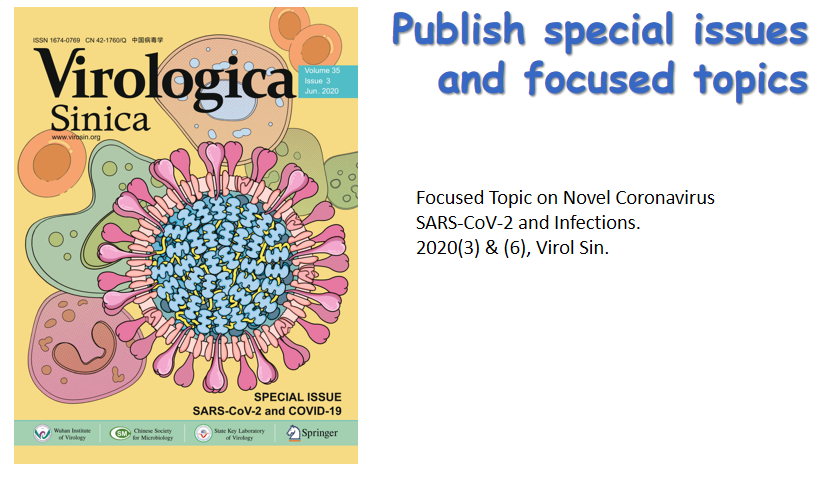
Zika virus (ZIKV), a significant mosquito-borne orthoflavivirus, has emerged as a major global health concern. However, comprehensive research on mosquito-to-mosquito transmission patterns of ZIKV remains limited. To explore how ZIKV transmits within mosquitoes, Wang et al. conducted a systematic laboratory investigation to assess the ability of ZIKV spread among mosquitoes and its impact on mosquito development. The study revealed that ZIKV can be transmitted both vertically and horizontally among Aedes aegypti mosquitoes, through oviposition and contact between mosquitoes of the same or opposite sex. Additionally, ZIKV infection resulted in a reduction in the number of mosquito eggs but an increase in the size of mosquito eggs, while altered levels of hormone related genes were also observed. The cover image illustrates ZIKV transmissions among mosquitoes, highlighting the significant threat it poses to humans (Kindly designed and provided by Prof. Jing Ye). See page 192–205 for details.
Respiratory syncytial virus (RSV) is one of the most common viruses leading to lower respiratory tract infections (LRTIs) in children and elderly individuals worldwide. Although significant progress in the prevention and treatment of RSV infection was made in 2023, with two anti-RSV vaccines and one monoclonal antibody approved by the FDA, there is still a lack of postinfection therapeutic drugs in clinical practice, especially for the pediatric population. In recent years, with an increasing understanding of the pathogenic mechanisms of RSV, drugs and drug candidates, have shown great potential for clinical application. In this review, we categorize and discuss promising anti-RSV drug candidates that have been in preclinical or clinical development over the last five years.
Human parainfluenza viruses (HPIV) are common viral pathogens in acute respiratory infection (ARI). We aimed to describe the epidemiological and molecular characteristics of HPIV from ARI patients. This cross-sectional study was conducted using respiratory samples from 9,696 ARI patients between 2016 and 2020 in southern China. All samples were analyzed by quantitative real-time polymerase chain reaction to determine the presence of HPIV and other common respiratory viruses. Descriptive statistics were performed to determine the temporal and population distribution of HPIV. The full-length hemagglutinin-neuraminidase (HN) gene of HPIV3-positive samples was sequenced for phylogenetic analysis. A total of 577 (6.0%) patients tested positive for HPIV, with HPIV3 being the predominant serotype, accounting for 46.8% of cases. Notably, 66.0% of these HPIV-positive cases were children aged 0-2 years. The prevalence of HPIV infections showed a decreased trend and altered peak during 2016-2020. Cough, fever, sputum production, and rhinorrhea were common respiratory symptoms in HPIV-positive patients. The majority of cases had pneumonia (63.4%). Human rhinovirus (HRV) and human coronavirus (HCoV) were the most common coinfection viruses in HPIV-positive cases, with proportions of 20.1% and 14.4%, respectively. Phylogenetic analysis revealed that the predominant lineage of HPIV3 was C3f (86.0%), followed by lineage C3a (8.0%), C3d (4.0%), and C3b (2.0%). These findings help to better understand the epidemiology of HPIV, and improve public health strategies to prevent and control HPIV infections in southern China.
Identifying the cause of respiratory tract infections is important for reducing the burden of diagnosis and treatment. To assess viral etiologies of hospitalized patients with pulmonary infection, bronchoalveolar lavage fluid (BALF) specimens were collected from non-COVID-19 adult patients (n = 333, including patients with lower respiratory tract infection, tuberculosis, lung cancer, and pulmonary nodules) between November 2020 and November 2021. Multiple common respiratory pathogens were detected using multiplex reverse-transcription polymerase chain reaction. The result showed that at least one virus was identified in 35.44% (118/333) of the cases. Among these, influenza virus was the most commonly identified, followed by the parainfluenza virus, coronavirus, human rhinoviruses, and human respiratory syncytial viruses. The tuberculosis group demonstrated the highest viral detection rate, yet paradoxically exhibited the lowest co-infection rate. In contrast, the highest co-infection frequency was observed in the pulmonary nodules group. Patients with viral infections exhibited more severe clinical symptoms compared to those without detected viral infections. However, this observation was only noted in the lower respiratory tract infection group among the different disease groups. Notably, among patients infected with a specific virus, there were no significant differences in viral load between single and co-infections. Our study identified the major causative agents in hospitalized adult patients with pulmonary infection, offering insights for precise disease diagnosis and the prevention of unnecessary use of antimicrobial drugs.
As an emerging genotype, the G9 genotype rotaviruses (RVs) are widespread among humans and pigs, and have been reported in many countries and regions in the recent years. Moreover, porcine G9 strains could cross the interspecies barrier to infect human. To investigate the epidemic trends of porcine G9 strains as well as the cross-immunoreactivity among different isolates, an epidemiological investigation about porcine G9 genotype RVs (PoRVs) was performed during the period 2020-2023 in multiple provinces of China. A total of nine representative strains were identified. The phylogenetic analysis based on viral VP7 gene showed that these strains mainly clustered with lineages III and VI, which revealed the predominant G9 PoRVs in China. Moreover, a new lineage, lineage VII, was identified, and strains of this lineage were found to be circulating in Guangdong and Taiwan. Except lineages I and IV, some isolates from other lineages could co-circulate in pigs and humans. Three G9 strains, namely 923H, 923E, and 923X, which belonged to the largest sub-lineage III, were isolated. Then, the significant cross-reactivity was observed among strains of the same or different lineages. This study is the first to systematically investigate the genetic and immunogenetic characteristics of porcine G9 genotype rotavirus in China, as well as the potential cross-species transmission between pigs and humans, providing a valuable direction for the effective prevention of porcine rotavirus.
Ephemeroviruses (EVs) are arthropod-borne rhabdoviruses and were isolated exclusively from cattle and haematophagous arthropods until two new ephemeroviruses were first identified from domestic pigs most recently. Here we report the identification of newer EVs in wild boar by meta-transcriptomic (MTT) sequencing. Further screening by specific RT-nPCR of tissue samples of 459 free-ranging wild boars collected between 2018 and 2023 from 26 provinces across China confirmed five positive wild boars in four provinces. Interestingly, two ticks especially collected from two positive wild boars were also EV positive. Finally, four complete genome sequences of wild boar ephemeroviruses (WbEVs) were obtained with two strains belonging to a new EV species, and the rest two falling into porcine ephemerovirus 2 (PoEV2) species identified from domestic pigs. Our study has further extended EV host range and demonstrated natural circulations of divergent EVs in wild boars, in which ticks may play roles. Biological implications of EV infection in wild boars should be interesting topics for future investigations.
Zika virus (ZIKV) is a mosquito-borne virus belonging to the genus Orthoflavivirus, and the family Flaviviridae. It commonly presents with febrile-like symptoms, neurological issues, and pregnancy complications in humans. Currently, there is no commercial vaccine or specific treatment available to prevent ZIKV infection. Therefore, controlling the epidemic's spread relies on preventing mosquitoes from transmitting the virus. Although various studies have explored the transmission of ZIKV between mosquitoes and vertebrate hosts, comprehensive research on potential mosquito-to-mosquito transmission of ZIKV remains limited. In this study, we conducted systematic laboratory investigations to assess the ability of ZIKV to spread among mosquitoes, and to evaluate the impact of ZIKV infection on mosquito development. Our findings revealed that ZIKV can be transmitted between Aedes aegypti mosquitoes both vertically and horizontally, through oviposition and contact between mosquitoes of the same or opposite sex. Additionally, we observed that ZIKV infection resulted in a reduction in the number of mosquito eggs but an increase in their size. The widespread distribution of ZIKV in infected mosquitoes and the altered levels of hormone related genes following viral infection were noted, which may contribute to viral transmission among mosquitoes and affect mosquito development. This research provides systematic experimental evidence of ZIKV transmission among mosquitoes, which is crucial for developing novel strategies to disrupt the spread of orthoflaviviruses and other mosquito-borne pathogens.
Porcine reproductive and respiratory syndrome (PRRS), a highly infectious immunosuppressive disease caused by porcine reproductive and respiratory syndrome virus (PRRSV), has led to significant economic losses in the global swine industry. The complexity of preventing and controlling PRRS, compounded by the limited efficacy of current vaccines, underscores the urgent need to identify antiviral targets and develop effective therapeutics against PRRSV. From the perspective of virus-host interactions, the discovery of target molecules associated with PRRSV resistance offers a promising strategy for future disease management. In this study, we conduct a comprehensive proteomic analysis using data-independent acquisition (DIA) mode to investigate the host response throughout the acute phase of PRRSV infection. This approach provides critical insights into the regulation of host antiviral and immune pathways during acute infection, advancing our theoretical understanding of PRRSV-host interactions and host gene dynamics during this critical phase. Notably, we identified SCARB2, a major lysosomal membrane protein associated with cholesterol metabolism, as a potential regulator of PRRSV replication. These findings offer novel perspectives for the prevention and control of PRRSV, contributing to the development of targeted antiviral strategies.
Naf1 (Nef-associated factor 1) is a host protein that interacts with human immunodeficiency virus type 1 (HIV-1) Nef protein. We and others have previously demonstrated that Naf1 restricts HIV-1 infection of T-lymphocytes. Myeloid cells are targets for HIV infection, but Naf1 expression in myeloid cells and whether it also regulates HIV infection in these cells are not yet identified. In this study, we found that Naf1 had a higher expression in CD14+ monocytes than in monocyte-derived dendritic cells (MDDCs), and its expression in both types of cells could be induced by HIV-1 gp120 glycoproteins or viral particles. Importantly, the expression of Naf1 restricted HIV-1 infection in monocytes and MDDCs. Functional investigation showed that both the constitutive and the induced expression of Naf1 inhibited NF-κB signaling in MDDCs and reduced the basal level or LPS (Lipopolysaccharide)-stimulated production of cytokines. Moreover, Naf1 reduced the expression of ICAM-1 (intercellular cell adhesion molecule-1) on MDDCs and compromised their capacity to prime the activation of resting CD4+ T cells in co-culture. In light of the essential role of NF-κB signaling for HIV-1 transcription, Naf1-mediated inhibition of NF-κB signaling may hinder a robust viral replication in MDDCs and help maintain viral persistence. Furthermore, virus-induced Naf1 expression in MDDCs may diminish the cross-talk between DC (dendritic cell) and T cells, hence suppressing the activation of antiviral immune responses. Taken together, we identified the new function of Naf1 in myeloid cells. Those findings may facilitate the understanding for the host restriction of HIV-1 infection in myeloid cells.
The evolution of severe acute respiratory syndrome coronavirus 2 (SARS-CoV-2) has resulted in mutations not only in the spike protein, aiding immune evasion, but also in the NSP3/4/6 proteins, crucial for regulating double-membrane vesicle (DMV) formation. However, the functional consequences of these NSP3/4/6 mutations remain poorly understood. In this study, a systematic analysis was conducted to investigate the evolutionary patterns of NSP3/4/6 mutations and their impact on DMV formation. The findings revealed that the NSP4 T492I mutation, a prevalent mutation found in all Delta and Omicron sub-lineages, notably enhances DMV formation. Mechanistically, the NSP4 T492I mutation enhances its homodimerization, leading to an increase in the size of puncta induced by NSP3/4, and also augments endoplasmic reticulum (ER) membrane curvature, resulting in a higher DMV density per fluorescent puncta. This study underscores the significance of the NSP4 T492I mutation in modulating DMV formation, with potential implications for the transmission dynamics of SARS-CoV-2. It contributes valuable insights into how these mutations impact viral replication and pathogenesis.
African swine fever virus (ASFV) pB318L is an important protein for viral replication that acts as a membrane-bound trans-geranylgeranyl-diphosphate synthase (GGPPS) catalyzing the condensation of isopentenyl diphosphate (IPP) with allylic diphosphates. Recently we solved the crystal structure pB318L lacking N-terminal transmembrane region and performed a preliminary structural analysis. In this study, structure-based mutagenesis study and geranylgeranyl pyrophosphate (GGPP) production assay further revealed the key residues for the GGPPS activity. Structural comparison showed pB318L displays a strong similarity to typical GGPPSs instead of protein prenyltransferases. The phylogenetic analysis indicated pB318L may share a common ancestor with the GGPPSs from Brassicaceae plants rather than from its natural host. The subcellular localization analysis showed pB318L is localized in both nucleus and cytoplasm (including the endoplasmic reticulum membrane and mitochondria outer membrane). A unique N-terminal nuclear localization signal (NLS) following the transmembrane region was discovered in pB318L and the NLS was confirmed to be required for the nuclear import. We further revealed the NLS plays an essential role in the interaction with nuclear transporter karyopherin subunit alpha 1 (KPNA1). Their interaction may suppress signal transducers and activators of transcription 1 (STAT1) translocation and subsequently competitively inhibit nuclear import of IFN-stimulated gene factor 3 (ISGF3) complex. Our biochemical, structural and cellular analyses provide novel insights to pB318L that acts as an essential GGPPS that promotes viral replication and as a nuclear import protein that may be involved in immune evasion of ASFV.
Artemisia annua L. is a medicinal herb with multiple therapeutic applications, whereas its anti-influenza A virus (IAV) efficiency and mechanism of action are still unclear. Here, we investigated the inhibition activity and mechanism of A. annua leaf methanol extracts (AALME) against IAV in vitro and in vivo. Our results revealed that AALME exhibits potent anti-IAV activity by interacting with IAV particles. Mechanistically, AALME directly targets the IAV nucleoprotein (NP) protein and abolishes the nuclear import of IAV NP. AALME profoundly suppresses IAV-induced mitochondrial apoptosis via suppressing ROS-mediated AIF-dependent pathways. More importantly, we found that AALME plays a crucial role in protecting mice from IAV infection and mitigating IAV pathogenicity. This current work provides mechanistic insight into the mechanism by which AALME controls IAV infection in vitro and in vivo, potentially contributing to the development of antiviral treatments for IAV infection.
Severe fever with thrombocytopenia syndrome (SFTS) is a novel emerging acute infectious disease caused by severe fever with thrombocytopenia syndrome virus (SFTSV), characterized by high fever and thrombocytopenia. It has been proved that traditional Chinese medicine (TCM) has displayed definite therapeutic effects on viral hemorrhagic fever, indicating its potential to treat SFTS. In this study, SFTS-relative key targets were predicted via gene ontology (GO) analysis and kyoto encyclopedia of genes and genomes (KEGG) enrichment analysis. Molecular docking was then used to select stable binders. Molecules matched TCMs were identified, and a new prescription, Qingqi Guxue decoction (QQGX), was formulated to clear heat and nourish blood, with a resulting drug composition network. We explored the optimal drug proportion for QQGX. Through an in-depth study of molecular mechanisms, we found that QQGX induces S phase arrest by promoting the degradation of cyclin A2 (CCNA2) and cyclin-dependent kinase 2 (CDK2), thereby inhibiting SFTSV replication. Finally, we verified the effectiveness and safety of QQGX based on the mouse liver bile duct organoid model infected with SFTSV. In summary, our study prepared a TCM decoction using the method of network pharmacology. This decoction has a significant inhibitory effect on the replication of SFTSV and provides a new treatment strategy for hemorrhagic fever with TCM.
Human bocavirus 1 (HBoV1; family: Parvoviridae) causes a wide spectrum of respiratory diseases in children and gastroenteritis in adults. A lack of sensitive cell lines and efficient animal models hinders research on HBoV, including the development of anti-HBoV drugs or vaccines. Although the construction of a wild-type HBoV1 infectious clone has been reported, generating HBoV1 infectious clone carrying foreign reporter genes with suitable insertion sites in its genome while retaining replicative ability remains challenging. Here, HBoV1 infectious clones harboring the 11-amino-acid HiBiT tag at five distinct insertion sites were constructed and evaluated. Only the recombinant HBoV1 carrying the HiBiT tag in the N-terminus of the NS1 protein (HBoV1-HiBiTNS1) displayed comparable characteristics to wild-type HBoV1 as determined via the analysis of viral DNA copy number, NanoLuc activity, viral protein expression, and the formation of replication intermediates. Notably, the replication kinetics of HBoV1-HiBiTNS1 could be examined by monitoring NanoLuc activity, which was noted to be correlated with the viral DNA level. Additionally, we successfully applied HiBiT-tagged HBoV1 for the evaluation of antiviral drug activity and identified ivermectin (EC50 = 2.27 μM) as a potent anti-HBoV1 replication drug. Overall, our study demonstrated that the HBoV1-HiBiTNS1 reporter can serve as a convenient platform for screening candidate drugs targeting HBoV1 replication and may also be useful for investigating the life cycle of the virus.
Highlights 1. We reported a novel H5N6 HPAIV belonging to clade 2.3.4.4b in wild birds in eastern China. 2. The novel H5N6 HPAIV most likely descended from clade 2.3.4.4b H5N1 virus in Japan. 3. The novel H5N6 HPAIV evolved from reassortment with H5 HPAIVs and other LPAIVs from wild birds.
Highlights 1. PREDAC is a semi-automated and user-friendly method for flu vaccine recommendations based on HA protein sequences. 2. PREDAC performed comparably to the WHO in recommending vaccines of influenza A(H3N2) viruses during the period of 2013–2023. 3. PREDAC can serve as a useful supplement to the traditional approach for flu vaccine recommendations. 4. More intensive surveillance of antigenic variations in the influenza virus are needed to improve vaccine recommendations.
Highlights 1. SMPD3 is identified as a novel host factor that inhibits Hepatitis B virus (HBV) replication at the transcriptional level. 2. SMPD3 knockdown enhances HBV replication in various cell models, increasing levels of HBsAg, HBeAg, and HBV DNA. 3. Mechanistic studies reveal SMPD3's inhibition of HBV transcription without affecting RNA stability or promoter activity.
Highlights 1. A neutralizing monoclonal antibody against the capsid protein of PAstV5 was prepared for the first time. 2. The B cell epitope of PAstV5 capsid protein was identified for the first time. 3. The monoclonal antibody 6c6 had strong neutralizing activity against PAstV5. 4. The identified epitope formed an alpha spiral structure and located outside the three-dimensional structure of the protein.