-
Accardi, R., Gruffat, H., Sirand, C., Fusil, F., Gheit, T., Hernandez-Vargas, H., Le Calvez-Kelm, F., Traverse-Glehen, A., Cosset, F.L., Manet, E., Wild, C.P., Tommasino, M., 2015. The mycotoxin aflatoxin B1 stimulates Epstein-Barr virus-induced B-cell transformation in in vitro and in vivo experimental models. Carcinogenesis, 36, 1440-1451.
-
Caves, E.A., Butch, R.M., Cook, S.A., Wasil, L.R., Chen, C., Di, Y.P., Lee, N., Shair, K.H.Y., 2017. Latent Membrane Protein 1 Is a Novel Determinant of Epstein-Barr Virus Genome Persistence and Reactivation. mSphere, 2, e00453-17.
-
Cheng, W., Chen, G., Jia, H., He, X., Jing, Z., 2018. DDX5 RNA Helicases: Emerging Roles in Viral Infection. Int J Mol Sci, 19, 1122.
-
Daikoku, T., Kudoh, A., Fujita, M., Sugaya, Y., Isomura, H., Tsurumi, T., 2004. In vivo dynamics of EBNA1-oriP interaction during latent and lytic replication of Epstein-Barr virus. J Biol Chem, 279, 54817-54825.
-
Damania, B., Kenney, S.C., Raab-Traub, N., 2022. Epstein-Barr virus: Biology and clinical disease. Cell, 185, 3652-3670.
-
Drosu, N.C., Edelman, E.R., Housman, D.E., 2020. Tenofovir prodrugs potently inhibit Epstein-Barr virus lytic DNA replication by targeting the viral DNA polymerase. Proc Natl Acad Sci U S A, 117, 12368-12374.
-
Fachko, D.N., Chen, Y., Skalsky, R.L., 2022. Epstein-Barr Virus miR-BHRF1-3 Targets the BZLF1 3'UTR and Regulates the Lytic Cycle. J Virol, 96, e0149521.
-
Fang, C.Y., Lee, C.H., Wu, C.C., Chang, Y.T., Yu, S.L., Chou, S.P., Huang, P.T., Chen, C.L., Hou, J.W., Chang, Y., Tsai, C.H., Takada, K., Chen, J.Y., 2009. Recurrent chemical reactivations of EBV promotes genome instability and enhances tumor progression of nasopharyngeal carcinoma cells. Int J Cancer, 124, 2016-2025.
-
Frappier, L., 2012. EBNA1 and host factors in Epstein-Barr virus latent DNA replication. Curr Opin Virol, 2, 733-739.
-
Frappier, L., 2015. EBNA1. Curr Top Microbiol Immunol, 391, 3-34.
-
Hashemi, V., Masjedi, A., Hazhir-Karzar, B., Tanomand, A., Shotorbani, S.S., Hojjat-Farsangi, M., Ghalamfarsa, G., Azizi, G., Anvari, E., Baradaran, B., Jadidi-Niaragh, F., 2019. The role of DEAD-box RNA helicase p68 (DDX5) in the development and treatment of breast cancer. J Cell Physiol, 234, 5478-5487.
-
Hu, J., Li, Y., Li, H., Shi, F., Xie, L., Zhao, L., Tang, M., Luo, X., Jia, W., Fan, J., Zhou, J., Gao, Q., Qiu, S., Wu, W., Zhang, X., Liao, W., Bode, A.M., Cao, Y., 2020. Targeting Epstein-Barr virus oncoprotein LMP1-mediated high oxidative stress suppresses EBV lytic reactivation and sensitizes tumors to radiation therapy. Theranostics, 10, 11921-11937.
-
Huang, J., Chen, H., Hutt-Fletcher, L., Ambinder, R.F., Hayward, S.D., 2003. Lytic viral replication as a contributor to the detection of Epstein-Barr virus in breast cancer. J Virol, 77, 13267-13274.
-
Jiang, J., Zhu, X., Li, S., Yan, Q., Ma, J., 2025. Building a Bridge Between the Mechanism of EBV Reactivation and the Treatment of EBV-Associated Cancers. J Med Virol, 97, e70192.
-
Jiang, L., Xie, C., Lung, H.L., Lo, K.W., Law, G.L., Mak, N.K., Wong, K.L., 2018. EBNA1-targeted inhibitors: Novel approaches for the treatment of Epstein-Barr virus-associated cancers. Theranostics, 8, 5307-5319.
-
Jung, Y.J., Choi, H., Kim, H., Lee, S.K., 2014. MicroRNA miR-BART20-5p stabilizes Epstein-Barr virus latency by directly targeting BZLF1 and BRLF1. J Virol, 88, 9027-9037.
-
Lee, N., Moss, W.N., Yario, T.A., Steitz, J.A., 2015. EBV noncoding RNA binds nascent RNA to drive host PAX5 to viral DNA. Cell, 160, 607-618.
-
Legrand, J.M.D., Chan, A.L., La, H.M., Rossello, F.J., Anko, M.L., Fuller-Pace, F.V., Hobbs, R.M., 2019. DDX5 plays essential transcriptional and post-transcriptional roles in the maintenance and function of spermatogonia. Nat Commun, 10, 2278.
-
Li, F., 2014. Anticancer drug FL118 is more than a survivin inhibitor: where is the Achilles' heel of cancer? Am J Cancer Res, 4, 304-311.
-
Li, F., Ling, X., Chakraborty, S., Fountzilas, C., Wang, J., Jamroze, A., Liu, X., Kalinski, P., Tang, D.G., 2023. Role of the DEAD-box RNA helicase DDX5 (p68) in cancer DNA repair, immune suppression, cancer metabolic control, virus infection promotion, and human microbiome (microbiota) negative influence. J Exp Clin Cancer Res, 42, 213.
-
Li, H., Hu, J., Luo, X., Bode, A.M., Dong, Z., Cao, Y., 2018. Therapies based on targeting Epstein-Barr virus lytic replication for EBV-associated malignancies. Cancer Sci, 109, 2101-2108.
-
Li, H., Li, Y., Hu, J., Liu, S., Luo, X., Tang, M., Bode, A.M., Dong, Z., Liu, X., Liao, W., Cao, Y., 2021. ()-Epigallocatechin-3-Gallate Inhibits EBV Lytic Replication via Targeting LMP1-Mediated MAPK Signal Axes. Oncol Res, 28, 763-778.
-
Li, H., Liu, S., Hu, J., Luo, X., Li, N., A, M.B., Cao, Y., 2016. Epstein-Barr virus lytic reactivation regulation and its pathogenic role in carcinogenesis. Int J Biol Sci, 12, 1309-1318.
-
Li, J., Xin, Y., Zhang, S., Li, Y., Jiang, M., Zhang, S., Yang, L., Yang, J., Cao, P., Lu, J., 2024. EIF4A3 is stabilized by the long noncoding RNA BC200 to regulate gene expression during Epstein-Barr virus infection. J Med Virol, 96, e29955.
-
Li, Z., Chen, X., Li, L., Liu, S., Yang, L., Ma, X., Tang, M., Bode, A.M., Dong, Z., Sun, L., Cao, Y., 2012. EBV encoded miR-BHRF1-1 potentiates viral lytic replication by downregulating host p53 in nasopharyngeal carcinoma. Int J Biochem Cell Biol, 44, 275-279.
-
Ling, X., Wu, W., Aljahdali, I.a.M., Liao, J., Santha, S., Fountzilas, C., Boland, P.M., Li, F., 2022. FL118, acting as a 'molecular glue degrader', binds to dephosphorylates and degrades the oncoprotein DDX5 (p68) to control c-Myc, survivin and mutant Kras against colorectal and pancreatic cancer with high efficacy. Clin Transl Med, 12, e881.
-
Ling, X., Wu, W., Fan, C., Xu, C., Liao, J., Rich, L.J., Huang, R.Y., Repasky, E.A., Wang, X., Li, F., 2018. An ABCG2 non-substrate anticancer agent FL118 targets drug-resistant cancer stem-like cells and overcomes treatment resistance of human pancreatic cancer. J Exp Clin Cancer Res, 37, 240.
-
Ling, X., Wu, W., Yan, L., Curtin, L., Farrauto, M.M., Sexton, S., Jamroze, A., Yu, C., Fountzilas, C., Tang, D.G., Li, F., 2024. Clinically and orally compatible formulation-manufactured DDX5 (p68)-targeting molecular glue FL118 products exhibit low toxicity but high efficacy against human cancer. J Pharm Anal, 14, 101001.
-
Ling, X., Xu, C., Fan, C., Zhong, K., Li, F., Wang, X., 2014. FL118 induces p53-dependent senescence in colorectal cancer cells by promoting degradation of MdmX. Cancer Res, 74, 7487-7497.
-
Liu, X., Jiang, G., Tan, C., Chen, K., Sun, Z., Du, J., Wang, B., Ai, F., Ma, Y., Tian, Y., Guo, Y., Guan, M., 2025. The pathogenic role and genomic characteristics of Epstein-Barr virus in vitreoretinal lymphoma. Virol Sin, 40, 804-811.
-
Liu, Y., Yang, X., Gan, J., Chen, S., Xiao, Z.X., Cao, Y., 2022. CB-Dock2: improved protein-ligand blind docking by integrating cavity detection, docking and homologous template fitting. Nucleic Acids Res, 50, W159-w164.
-
Lu, J., Qu, Y., Liu, Y., Jambusaria, R., Han, Z., Ruthel, G., Freedman, B.D., Harty, R.N., 2013. Host IQGAP1 and Ebola virus VP40 interactions facilitate virus-like particle egress. J Virol, 87, 7777-7780.
-
Lui, V.W., Wong, E.Y., Ho, Y., Hong, B., Wong, S.C., Tao, Q., Choi, G.C., Au, T.C., Ho, K., Yau, D.M., Ma, B.B., Hui, E.P., Chan, A.S., Tsang, C.M., Tsao, S.W., Grandis, J.R., Chan, A.T., 2009. STAT3 activation contributes directly to Epstein-Barr virus-mediated invasiveness of nasopharyngeal cancer cells in vitro. Int J Cancer, 125, 1884-1893.
-
Ma, J., Chen, T., Wu, S., Yang, C., Bai, M., Shu, K., Li, K., Zhang, G., Jin, Z., He, F., Hermjakob, H., Zhu, Y., 2019. iProX: an integrated proteome resource. Nucleic Acids Res, 47, D1211-d1217.
-
Ma, S.D., Hegde, S., Young, K.H., Sullivan, R., Rajesh, D., Zhou, Y., Jankowska-Gan, E., Burlingham, W.J., Sun, X., Gulley, M.L., Tang, W., Gumperz, J.E., Kenney, S.C., 2011. A new model of Epstein-Barr virus infection reveals an important role for early lytic viral protein expression in the development of lymphomas. J Virol, 85, 165-177.
-
Manners, O., Murphy, J.C., Coleman, A., Hughes, D.J., Whitehouse, A., 2018. Contribution of the KSHV and EBV lytic cycles to tumourigenesis. Curr Opin Virol, 32, 60-70.
-
Martel-Renoir, D., Grunewald, V., Touitou, R., Schwaab, G., Joab, I., 1995. Qualitative analysis of the expression of Epstein-Barr virus lytic genes in nasopharyngeal carcinoma biopsies. J Gen Virol, 76 ( Pt 6), 1401-1408.
-
Mchugh, D., Caduff, N., Barros, M.H.M., Ramer, P.C., Raykova, A., Murer, A., Landtwing, V., Quast, I., Styles, C.T., Spohn, M., et al., 2017. Persistent KSHV Infection Increases EBV-Associated Tumor Formation In Vivo via Enhanced EBV Lytic Gene Expression. Cell Host Microbe, 22, 61-73.e67.
-
Munz, C., 2019. Latency and lytic replication in Epstein-Barr virus-associated oncogenesis. Nat Rev Microbiol, 17, 691-700.
-
Nawandar, D.M., Wang, A., Makielski, K., Lee, D., Ma, S., Barlow, E., Reusch, J., Jiang, R., Wille, C.K., Greenspan, D., Greenspan, J.S., Mertz, J.E., Hutt-Fletcher, L., Johannsen, E.C., Lambert, P.F., Kenney, S.C., 2015. Differentiation-Dependent KLF4 Expression Promotes Lytic Epstein-Barr Virus Infection in Epithelial Cells. PLoS Pathog, 11, e1005195.
-
Nyamao, R.M., Wu, J., Yu, L., Xiao, X., Zhang, F.M., 2019. Roles of DDX5 in the tumorigenesis, proliferation, differentiation, metastasis and pathway regulation of human malignancies. Biochim Biophys Acta Rev Cancer, 1871, 85-98.
-
Sandhu, P.K., Damania, B., 2025. RNA helicases, DDX5 and DDX17, facilitate lytic reactivation of gammaherpesviruses. PLoS Pathog, 21, e1013009.
-
Shao, Y., Li, H., Wu, Y., Wang, X., Meng, J., Hu, Z., Xia, L., Cao, S., Tian, W., Zhang, Y., Feng, X., Zhang, X., Li, Y., Yang, G., 2023. The feedback loop of AURKA/DDX5/TMEM147-AS1/let-7 drives lipophagy to induce cisplatin resistance in epithelial ovarian cancer. Cancer Lett, 565, 216241.
-
Shumilov, A., Tsai, M.H., Schlosser, Y.T., Kratz, A.S., Bernhardt, K., Fink, S., Mizani, T., Lin, X., Jauch, A., Mautner, J., Kopp-Schneider, A., Feederle, R., Hoffmann, I., Delecluse, H.J., 2017. Epstein-Barr virus particles induce centrosome amplification and chromosomal instability. Nat Commun, 8, 14257.
-
Sivachandran, N., Wang, X., Frappier, L., 2012. Functions of the Epstein-Barr virus EBNA1 protein in viral reactivation and lytic infection. J Virol, 86, 6146-6158.
-
Soldan, S.S., Lieberman, P.M., 2023. Epstein-Barr virus and multiple sclerosis. Nat Rev Microbiol, 21, 51-64.
-
Tago, K., Funakoshi-Tago, M., Itoh, H., Furukawa, Y., Kikuchi, J., Kato, T., Suzuki, K., Yanagisawa, K., 2015. Arf tumor suppressor disrupts the oncogenic positive feedback loop including c-Myc and DDX5. Oncogene, 34, 314-322.
-
Tsang, C.M., Zhang, G., Seto, E., Takada, K., Deng, W., Yip, Y.L., Man, C., Hau, P.M., Chen, H., Cao, Y., Lo, K.W., Middeldorp, J.M., Cheung, A.L., Tsao, S.W., 2010. Epstein-Barr virus infection in immortalized nasopharyngeal epithelial cells: regulation of infection and phenotypic characterization. Int J Cancer, 127, 1570-1583.
-
Tsao, S.W., Tsang, C.M., Lo, K.W., 2017. Epstein-Barr virus infection and nasopharyngeal carcinoma. Philos Trans R Soc Lond B Biol Sci, 372, 20160270.
-
Wang, T., Cao, L., Dong, X., Wu, F., De, W., Huang, L., Wan, Q., 2020. LINC01116 promotes tumor proliferation and neutrophil recruitment via DDX5-mediated regulation of IL-1β in glioma cell. Cell Death Dis, 11, 302.
-
Willard, K.A., Barry, A.P., Oduor, C.I., Ong'echa, J.M., Bailey, J.A., Moormann, A.M., Luftig, M.A., 2023. Viral and host factors drive a type 1 Epstein-Barr virus spontaneous lytic phenotype. mBio, 14, e0220423.
-
Wille, C.K., Nawandar, D.M., Panfil, A.R., Ko, M.M., Hagemeier, S.R., Kenney, S.C., 2013. Viral genome methylation differentially affects the ability of BZLF1 versus BRLF1 to activate Epstein-Barr virus lytic gene expression and viral replication. J Virol, 87, 935-950.
-
Wu, C.C., Fang, C.Y., Hsu, H.Y., Chen, Y.J., Chou, S.P., Huang, S.Y., Cheng, Y.J., Lin, S.F., Chang, Y., Tsai, C.H., Chen, J.Y., 2016. Luteolin inhibits Epstein-Barr virus lytic reactivation by repressing the promoter activities of immediate-early genes. Antiviral Res, 132, 99-110.
-
Wu, G., Xing, Z., Tran, E.J., Yang, D., 2019. DDX5 helicase resolves G-quadruplex and is involved in MYC gene transcriptional activation. Proc Natl Acad Sci U S A, 116, 20453-20461.
-
Xin, S., Du, S., Liu, L., Xie, Y., Zuo, L., Yang, J., Hu, J., Yue, W., Zhang, J., Cao, P., Zhu, F., Lu, J., 2019. Epstein-Barr Virus Nuclear Antigen 1 Recruits Cyclophilin A to Facilitate the Replication of Viral DNA Genome. Front Microbiol, 10, 2879.
-
Xin, S., Liu, L., Li, Y., Yang, J., Zuo, L., Cao, P., Yan, Q., Li, S., Yang, L., Cui, T., Lu, J., 2022. Cyclophilin A binds to AKT1 and facilitates the tumorigenicity of Epstein-Barr virus by mediating the activation of AKT/mTOR/NF-κB positive feedback loop. Virol Sin, 37, 913-921.
-
Yang, Y., Ding, T., Cong, Y., Luo, X., Liu, C., Gong, T., Zhao, M., Zheng, X., Li, C., Zhang, Y., et al., 2024. Interferon-induced transmembrane protein-1 competitively blocks Ephrin receptor A2-mediated Epstein-Barr virus entry into epithelial cells. Nat Microbiol, 9, 1256-1270.
-
Yu, P.C., Hou, D., Chang, B., Liu, N., Xu, C.H., Chen, X., Hu, C.L., Liu, T., Wang, X., Zhang, Q., et al., 2024. SMARCA5 reprograms AKR1B1-mediated fructose metabolism to control leukemogenesis. Dev Cell, 59, 1954-1971.e1957.
-
Zhang, J., Zhang, S., Zuo, L., Yue, W., Li, S., Xin, S., Liu, L., Lu, J., 2019. Differential expression profiling of lncRNAs related to Epstein-Barr virus infection in the epithelial cells. J Med Virol, 91, 1845-1855.
-
Zhang, L., Wu, H., Sun, G., Xu, X., Sun, X., Cao, L., 2016. Trichloromethane fraction of Incarvillea compacta induces lytic cytotoxicity and apoptosis in Epstein-Barr virus-positive gastric cancer AGS cells. BMC Complement Altern Med, 16, 344.








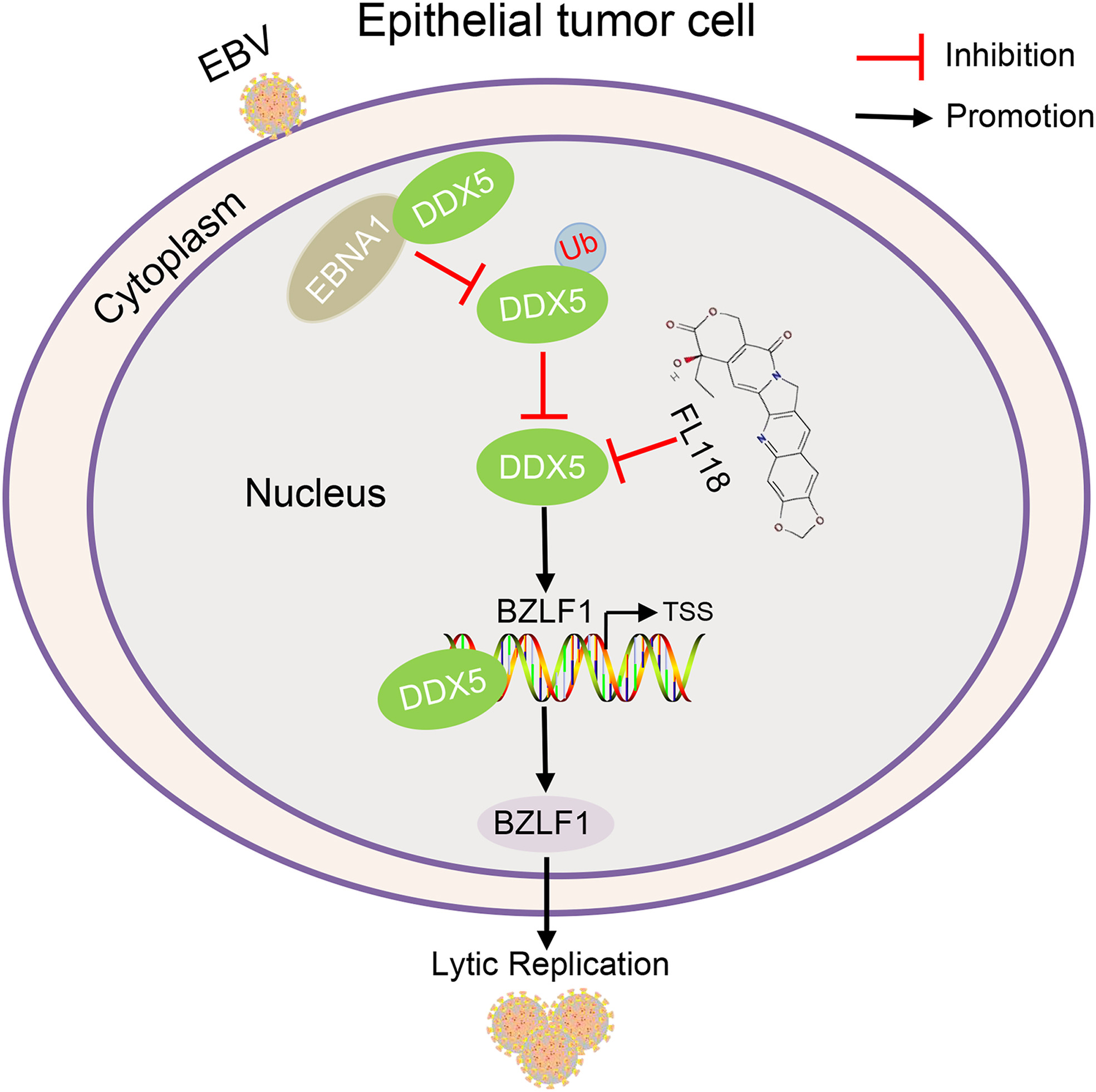




 DownLoad: